






Navratri Skincare & Haircare Routine for 9 Nights of Garba
Last updated: August 26, 2026
Nine consecutive nights of dancing, sweating, dressing up, and washing off makeup is a genuinely unusual stretch for a child's skin and hair to go through — most festivals ask for one big day of effort, but Navratri asks for nine, back to back, often with very little recovery time in between. A proper navratri skincare routine isn't an indulgence here — it's genuinely necessary maintenance for a body doing something unusual nine nights running.
The same logic applies to hair. Between hairstyling for garba, dust and sweat from crowded dancing grounds, and the general wear of nine active nights, thinking through navratri haircare for kids ahead of time saves a lot of mid-festival scrambling and tangled, dry, or irritated-scalp frustration by day six or seven.
Tuco Kids tip: The accumulation matters more than any single night — skin and hair that look fine after night one can look noticeably more stressed by night seven if the same small issues aren't addressed each evening.

Contents
- Why Nine Consecutive Nights Is Genuinely Different
- A Pre-Garba Routine Worth Building
- The Post-Garba Wind-Down
- Removing Festive Makeup Properly, Every Night
- Haircare Through Nine Nights of Styling
- Sweat, Heavy Fabric, and Jewelry Irritation
- A Mid-Festival Recovery Day, If You Can Manage One
- Tuco Products for a Nine-Night Routine
- When to See a Doctor
- FAQs
- Related Reads
Why Nine Consecutive Nights Is Genuinely Different
A single big event — a birthday party, one day of Diwali — puts a temporary strain on skin and hair that recovers naturally within a day or two of normal rest. Navratri doesn't give that recovery window, since the same demands (makeup, sweat, styling, tight festive clothing) repeat every single night for over a week. This is the same basic principle behind why athletes think about recovery between training sessions, not just performance during them — the cumulative effect of repeated stress without adequate recovery time is what actually causes visible problems, more so than any single night's activity on its own. A napkin-thin routine that would be completely fine for a one-off event needs real reinforcement to hold up across nine nights.
A Pre-Garba Routine Worth Building
Before the makeup and styling even begin each evening, a quick, consistent pre-garba routine sets skin up to handle the night ahead better. A gentle cleanse removes the day's accumulated dust and oil before makeup goes on top of it, since applying makeup over already-oily or dust-covered skin tends to worsen both how the makeup wears through hours of dancing and how skin feels afterward. A light, non-greasy moisturizer applied before makeup gives skin a bit of a protective base rather than makeup sitting directly on dry or bare skin, which matters more across nine repeated nights than it would for a single event.
The Post-Garba Wind-Down
The single most important — and most commonly skipped — part of a Navratri skincare routine is the wind-down after getting home, often late at night after hours of dancing, when everyone (child included) is tired and the temptation to just fall into bed is strongest. Skipping proper cleansing on even one or two nights out of nine is unlikely to cause a real problem, but skipping it repeatedly across the full nine nights is exactly the kind of small, compounding neglect that shows up as visibly irritated, tired-looking skin by the festival's later days. A quick, gentle cleanse followed by a barrier-supporting moisturizer, even done a little sleepily and quickly, does far more for skin recovery than skipping it in favor of an extra ten minutes of sleep.
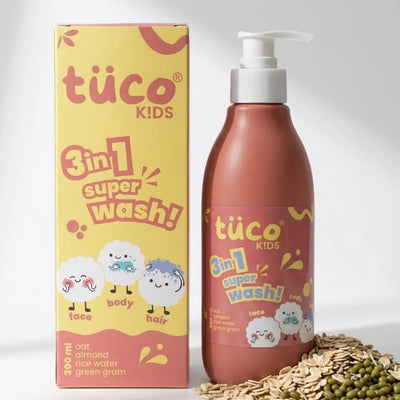
Shop 3-in-1 Oat Kit →

Removing Festive Makeup Properly, Every Night
Rubbing at makeup with a dry towel or, worse, leaving it on entirely overnight because a child is too tired to bother, causes far more irritation across nine nights than the makeup itself typically would with proper removal. A soft, damp cloth with a gentle cleanser lifts most play makeup products without needing to scrub, and it's worth being a little more careful and thorough around the eyes and lips specifically, since skin there is thinnest and shows irritation fastest, especially after repeated nightly exposure. If skin looks a little pink or reactive after removal on any given night, a calming, oat-based formula helps it settle before the next night's makeup goes on top.
Haircare Through Nine Nights of Styling
Hair pulled into tight styles for garba — braids, buns, styles that hold up well through vigorous dancing — night after night puts real, repeated tension on the scalp and hair shaft that a single night wouldn't. Alternating between a couple of different hairstyles across the nine nights, rather than the exact same tight style every single night, reduces repeated stress on the same section of hair and scalp. A gentle, sulfate-free shampoo used regularly through the festival (not necessarily every single night, but consistently enough to manage the buildup of styling product, sweat, and dust) keeps hair and scalp from reaching an uncomfortable, itchy state by the later days. Detangling gently before bed, rather than leaving a day's tangled, product-laden hair to knot further overnight, saves a lot of morning-of pain and hair breakage the next day.
Sweat, Heavy Fabric, and Jewelry Irritation
Hours of dancing in embellished, sometimes heavy chaniya cholis or similar festive wear, combined with sweat in what's often still warm late-September or October weather, creates real friction and moisture-related irritation risk across repeated nights. A soft cotton layer underneath festive outer clothing reduces direct friction against skin, and changing out of festival wear reasonably promptly after getting home — rather than lounging in a sweaty, heavy outfit for an extra hour out of tiredness — gives skin a better chance to breathe and recover before the next night's outfit goes back on. The same logic applies to jewelry: removing bangles, earrings, and other accessories promptly after the event, rather than sleeping in them, limits how long any area under jewelry stays irritated.
A Mid-Festival Recovery Day, If You Can Manage One
Not every family attends garba every single one of the nine nights, and if your family's schedule allows for even one lighter night in the middle of the festival, it's genuinely useful for skin and hair recovery, not just for general tiredness. A night without makeup, without a tight hairstyle, and with an earlier bedtime gives skin and scalp a real break partway through the nine-day stretch, meaningfully reducing the cumulative strain by the time the later, often busier nights (typically the final two or three days, when garba grounds tend to be most crowded) arrive.
Tuco Products for a Nine-Night Routine
| Ingredients | Tuco Product | Key Features | Age-wise Recommendation |
|---|---|---|---|
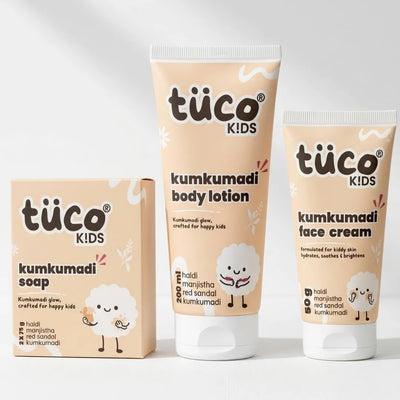
| Turmeric, Kakadu Plum, almond oil | 3-in-1 Bath Kit | Daily soap, lotion, and face cream — a full post-garba reset | 3–15 years |
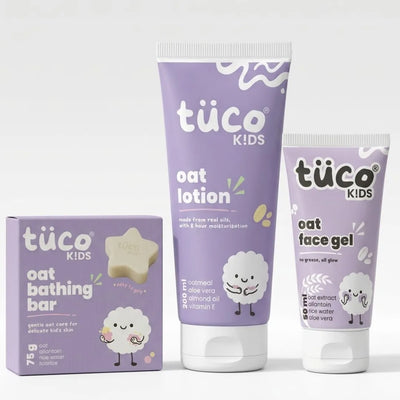
| Oat extract, aloe vera | 3-in-1 Oat Kit | Calming, barrier-repair formula for makeup or jewelry irritation | 2–15 years, best for toddlers |
| Reetha, hibiscus | Reetha Shampoo for Kids | Gentle, sulfate-free option for repeated nightly hair washing | 2–15 years |
When to See a Doctor
Most Navratri-related skin and scalp irritation is mild and resolves within a day or two of consistent, gentle care. See a doctor if a rash spreads, blisters, or shows signs of infection, if scalp tenderness from tight hairstyles persists well after the festival ends, or if irritation from the same recurring source — a specific fabric, jewelry, or product — keeps showing up every year, since that pattern can point to a genuine sensitivity worth identifying properly.
FAQs
Why does skin get more irritated later in the nine nights of Navratri than on the first night?
Repeated exposure to makeup, sweat, and tight festive clothing compounds over consecutive nights without much recovery time, unlike a single-event occasion that gives skin a chance to rest afterward.
What's a simple navratri skincare routine that's realistic for nine busy nights?
A quick pre-garba cleanse and light moisturizer, plus a proper post-garba cleanse and moisturize even when tired, covers most of what's needed without an elaborate routine.
How does garba night skincare for kids differ from a normal daily routine?
The main difference is consistency under fatigue — the post-event cleanse matters more than usual because it's the step most likely to get skipped after a long, tiring night.
What navratri haircare for kids helps with tight garba hairstyles?
Alternating between a couple of different hairstyles across the nine nights, rather than repeating the same tight style every night, reduces repeated stress on the same section of scalp and hair.
Should I use a different shampoo during Navratri than usual?
A gentle, sulfate-free shampoo used consistently through the festival helps manage the buildup of styling product, sweat, and dust without over-stripping hair from more frequent washing.
Is it okay to skip skincare on one or two nights during the festival?
Occasionally skipping is unlikely to cause a real problem — it's the repeated, consistent skipping across most of the nine nights that tends to show up as visible irritation by the later days.
When should I be concerned about skin or scalp issues during Navratri?
See a doctor if a rash spreads, shows signs of infection, or if scalp tenderness from tight hairstyles persists well after the festival ends.