












Navratri Kanya Pujan Gift Guide: Rituals, Etiquette & Best Picks
Last updated: August 26, 2026
Every Ashtami or Navami morning during Navratri, a familiar scene plays out in millions of Indian homes: a mother is on her knees washing the feet of a nine-year-old neighbor, a plate of halwa-puri-chana is being plated for the fourth kanya of the morning, and someone is quietly wondering, for the third year running, whether the same gift given last year is going to look a little thin this time around. Good kanya pujan gifts matter more than most festival gifts precisely because kanya pujan isn't really a gift-giving occasion in the first place — it's a ritual of respect, and the gift is a small, almost secondary part of a much older tradition.
That context is worth sitting with before shopping for anything. navratri gifts for kanya aren't judged the way a birthday present is — nobody is comparing brands or price tags the way they might at a kid's birthday party. What actually matters is getting the ritual itself right, and understanding that the gift is one part of an act of honoring, not the main event.
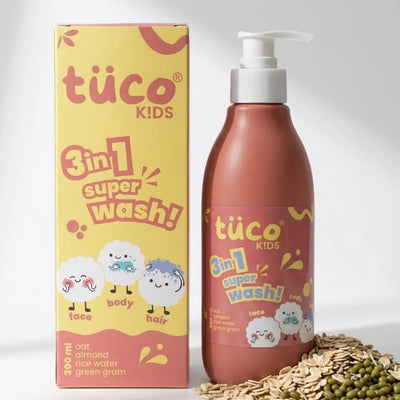
Tuco Kids tip: A small, practical item a young girl will actually use — rather than an impressive-looking but disposable trinket — is almost always the better choice, since kanya pujan gifts are meant to be a gesture of respect, not a display.
Shop Beetroot Lip & Cheek Tint →

Contents
- What Kanya Pujan Actually Is
- When It Happens and How Many Girls Are Invited
- The Ritual, Step by Step
- Regional and Family Variation
- Etiquette Questions Parents Actually Ask
- Gift Categories That Actually Work
- A Few Ready-Made Options
- If You're Hosting: Practical Notes
- If Your Daughter Is Being Invited As a Kanya
- Age Considerations for the Girls Themselves
- FAQs
- Related Reads
What Kanya Pujan Actually Is
Kanya Pujan (also called Kanjak Pujan in parts of North India) is the ritual worship of young, pre-pubescent girls, performed during Navratri as an embodiment of Devi — the divine feminine — in human form. The underlying theological idea is that the goddess herself, in her many forms across the nine days of Navratri, is present in every young girl, and honoring these girls with the same rituals used to worship a deity — washing their feet, applying tilak, offering food, and giving a small gift or dakshina — is a way of directly worshipping the divine feminine rather than only doing so through an idol or image.
This makes kanya pujan meaningfully different from most other Indian festival customs involving gift-giving. It isn't reciprocal in the way Diwali gifting or a wedding shagun is — the girls being honored aren't expected to give anything back, and the honor flows entirely in one direction, from the worshipper to the child. Understanding this one-directional, reverential structure is what makes the rest of the etiquette around kanya pujan make sense.
When It Happens and How Many Girls Are Invited
Most families perform kanya pujan on Ashtami (the eighth day of Navratri) or Navami (the ninth day), though some households do it on both days, and a smaller number choose to do it every day of the nine-day festival. The number of girls invited traditionally follows the number nine, echoing the nine forms of Durga honored across Navratri, though in practice most families invite anywhere from two to nine girls depending on household size, how many young girls live nearby, and simple logistics — feeding and gifting nine children properly takes real planning, and plenty of families scale down without any sense that they're doing the ritual incorrectly.
A young boy is also frequently included in the ritual in many households, usually just one, representing Bhairav or Langura — considered a guardian companion to the goddess in this context — and is honored alongside the girls, though the core ritual remains centered on the kanyas.
The Ritual, Step by Step
While specifics vary by region and family tradition, the ritual generally follows a recognizable sequence. The girls are welcomed into the home, often with their feet washed by the host as a gesture of humility and respect — a physical act that mirrors how one might welcome an honored deity or guest of the highest status. A tilak (a mark of vermilion or kumkum) is applied to each girl's forehead, sometimes accompanied by tying a moli (sacred red thread) around the wrist. A simple prayer or aarti is often performed with the girls present, treating them, for these few minutes, as the living embodiment of the goddess being invoked.
Food follows — traditionally halwa (a semolina-based sweet), puri (fried bread), and chana (chickpeas), a combination specific enough to kanya pujan that most Indian households recognize the smell and sequence instantly during Navratri season. Once the meal is finished, each girl receives a gift, sometimes alongside dakshina (a small monetary offering), and the host typically touches the girls' feet one final time before they leave, closing the ritual with the same gesture of reverence it opened with.
Regional and Family Variation
Kanya Pujan is most prominently and widely practiced in North India — Delhi, Uttar Pradesh, Punjab, Haryana, and Bihar in particular — where it's often considered an essential, non-negotiable part of observing Navratri, especially for families who fast through the nine days and break their fast specifically through this ritual on Ashtami or Navami. In many South Indian and Eastern Indian traditions, Navratri is observed quite differently (with golu doll displays in Tamil Nadu, or Durga Puja pandals in Bengal taking much more central roles), and kanya pujan in the North Indian sense may not be practiced at all, or may appear in a more localized, less formalized version.
Even within North Indian families, there's real variation in formality — some households perform an elaborate version with a priest present and a large number of girls, while others do a simple, warm version with two or three neighborhood children and no ritual specialist involved at all. Neither version is "more correct"; the tradition has always accommodated a wide range of scale depending on a family's resources, beliefs, and practical circumstances.
Etiquette Questions Parents Actually Ask
A few etiquette questions come up often enough to be worth addressing directly. First, on age: kanya pujan traditionally honors girls who haven't reached puberty, generally understood as roughly two to ten years old, though families vary in exactly where they draw this line and it's not treated as a strict, policed cutoff — the spirit of the ritual matters more than an exact age boundary. Second, on reciprocity: because the ritual isn't a mutual gift exchange, there's no expectation that a family whose daughter was honored as a kanya needs to "return the favor" by hosting their own kanya pujan or gifting the host's children — the direction of the ritual simply doesn't work that way. Third, on non-Hindu or non-participating families: if you're invited to have your daughter join a neighbor's or relative's kanya pujan and your family doesn't otherwise observe the ritual, it's entirely appropriate to either politely decline or participate warmly as a gesture of goodwill and community — most hosts extend the invitation in a spirit of neighborly warmth rather than religious obligation.
Gift Categories That Actually Work
Because the gift is meant to be a small, respectful gesture rather than an impressive display, the categories that work best tend to be modest, practical, and slightly tailored to a young girl specifically, without needing to be elaborate. Small, useful accessories — a simple hair clip set, bangles, a small pouch or coin purse — are traditional and still popular precisely because they're inexpensive, universally appropriate, and align with the idea of adorning the "goddess" being honored, which is part of the traditional symbolism behind giving items like bangles or bindis during the ritual. Stationery items (a small notebook, a set of pencils, a story book) work well for the practical-gift-minded host, and tend to be genuinely used rather than set aside.
A small amount of dakshina, typically in the range of a few rupees to a modest note, is traditional and still very common alongside or instead of a physical gift — there's no fixed "correct" amount, and it's meant as a token gesture rather than a meaningful sum. Sweets, sometimes given as a small take-home packet in addition to the meal eaten during the ritual itself, are also a common and appreciated closing gesture, extending the "prasad" quality of the ritual meal into something the child can share with their own family afterward.
A Few Ready-Made Options
| Gift Type | Tuco Product | Why It Works | Best For |
|---|---|---|---|
| Small, individual item | Beetroot Lip & Cheek Tint | Small, individually packaged, gentle enough for younger girls | Ages 4–10 |
| Kajal, pack of 2 | Kiddy Kajal | Can be split across two kanyas if you're gifting a group | Ages 3–10 |

If You're Hosting: Practical Notes
For hosts planning their own kanya pujan, a few practical notes make the morning smoother. Preparing gifts in advance — the night before rather than the morning of — avoids the scramble of last-minute shopping on what's often an already busy fasting-and-cooking morning. Buying slightly more gifts than the exact expected number of girls is a sensible cushion, since it's not unusual for an extra child from the neighborhood to show up, and having nothing to offer them feels far worse than a small surplus. If dakshina is part of your practice, having exact change or fresh notes ready in advance is a small but genuinely useful bit of preparation that a lot of first-time hosts overlook until the morning is already underway.
If Your Daughter Is Being Invited As a Kanya
For families on the receiving end of an invitation, a few notes help the morning go well for the child too. Most rituals ask a young girl to sit for a short period of prayer, have her feet washed, and eat a meal — all fairly gentle and unlikely to cause distress, but it's worth briefly explaining to a young child beforehand what will happen and why, so the experience feels understood rather than confusing. If a child has any dietary restriction or allergy, it's entirely appropriate to mention this to the host beforehand, since the halwa-puri-chana meal is fairly standard and hosts are almost always happy to accommodate in advance rather than have a child sit through a meal she can't eat.
Age Considerations for the Girls Themselves
Very young girls — toddlers around two or three — are honored in the ritual but obviously participate more passively, often needing help sitting through the prayer portion and eating with some assistance; hosts generally understand and accommodate this without any expectation of independent participation. Girls between about five and eight tend to be the most common age range invited, old enough to sit through the ritual with reasonable patience and genuinely enjoy the food and small gift, while still young enough to comfortably fit the traditional "kanya" age range most families observe. Girls closer to nine or ten, at the older end of the typical range, often participate with a fuller understanding of what's happening and why, which can make the experience more meaningful for them, though families vary on exactly when they consider a girl to have "aged out" of being invited as a kanya.
FAQs
What is the meaning behind kanya pujan gifts specifically?
The gift is a small, closing gesture of respect within a ritual that treats young girls as embodiments of the goddess — it's meant to be modest and practical, not an impressive or competitive display.
What age range is appropriate for navratri gifts for kanya?
Traditionally, kanya pujan honors pre-pubescent girls, generally understood as roughly two to ten years old, though the exact cutoff varies by family and isn't strictly enforced.
Are navratri gifts for kanjak the same as regular Navratri gifts?
Kanjak (a term used mainly in North India) refers to the same ritual as kanya pujan, and the gift customs are the same — modest, respectful items rather than elaborate presents.
What are good kanya pujan gift ideas if I'm hosting several girls?
Small, individually packaged items like hair accessories, a modest cosmetic item, or stationery scale well for a group and keep the gesture consistent across all the girls.
Do I need to give dakshina in addition to a physical gift?
Many families give both, but it's not strictly required — dakshina alone, a physical gift alone, or a combination are all accepted practices depending on family tradition.
Is kanya pujan practiced the same way across all of India?
No — it's most prominent in North Indian traditions, while many South Indian and Eastern Indian families observe Navratri through different customs like golu displays or Durga Puja, without the same kanya pujan ritual.
What if my daughter is invited to a kanya pujan but we don't usually observe Navratri rituals?
It's entirely appropriate to participate as a gesture of goodwill if you're comfortable, or to politely decline — most hosts extend the invitation warmly rather than as a religious obligation.
Is there a "correct" number of girls to invite for kanya pujan?
Nine is the traditional number, symbolizing the nine forms of Durga, but most families invite fewer based on practical considerations, and this is widely accepted as normal.