



Sunscreen for Kids with Dark Skin India: No White Cast Options That Work
"My daughter refuses to wear sunscreen because it makes her look like a ghost." "The mineral sunscreen I bought leaves my son's brown skin looking chalky and gray." "Everyone at school made fun of him for looking like he's wearing face paint."
Sound familiar? The struggle to find sunscreen for dark skin kids india that actually works—not just in protecting from UV damage, but in being something your child will agree to wear without embarrassment—is real. The white cast problem isn't vanity or superficial concern. It's a legitimate barrier to sun protection affecting millions of Indian children with medium to dark complexions.
Here's the truth: no white cast sunscreen kids india options exist, work beautifully, and your child absolutely deserves sun protection that respects their natural skin tone while keeping them safe from harmful UV rays.
Understanding the White Cast Problem
Before solving it, let's understand what creates this frustrating issue:
The Science Behind White Cast
Physical (mineral) sunscreens work by sitting on the skin's surface and physically reflecting UV rays away. The active ingredients are:
Zinc oxide: A white mineral pigment that scatters and reflects both UVA and UVB radiation
Titanium dioxide: Another white mineral that primarily reflects UVB rays
Why they look white: These minerals are naturally white pigments. When applied to skin, they create a visible layer—essentially a white film that reflects not just UV light, but visible light too, creating that chalky, ghostly appearance.
The particle size factor: Traditional mineral sunscreens use larger particles (200+ nanometers) which scatter visible light significantly, creating pronounced white cast. Modern formulations use smaller particles that reduce—but don't always eliminate—this effect.
Why It's Dramatically Worse on Brown and Dark Skin
The contrast issue:
- White pigment on pale skin: minimal visual contrast
- White pigment on medium skin: noticeable contrast
- White pigment on dark skin: stark, obvious contrast
- The darker the natural skin tone, the more conspicuous the white cast becomes
Historical neglect: The sunscreen industry developed primarily for lighter-skinned populations. Products were formulated and tested on fair skin, where white cast was considered acceptable or barely noticeable. Sunscreen for brown skin children india was simply not a consideration in product development for decades.
Modern market reality: Even today, most sunscreens available in India are imported or based on formulations designed for international (primarily Western) markets where the predominant skin tone is lighter.
The Cultural and Emotional Impact
India's complicated relationship with skin tone:
- Colorism and bias toward lighter skin persist
- Children internalize these harmful beauty standards early
- White cast on dark skin can feel shameful or embarrassing
- "Ghost face" comments from peers hurt deeply
- Refusing sunscreen becomes about dignity, not defiance
The catch-22: Parents know sun protection is crucial. Children refuse because the sunscreen makes them look and feel uncomfortable. Without addressing the white cast issue, consistent sun protection becomes nearly impossible.
Breaking the "Dark Skin Doesn't Need Sunscreen" Myth
Let's immediately address this dangerous misconception:
The False "Natural Protection" Claim
The myth: "Dark skin has natural SPF protection, so sunscreen isn't necessary."
The partial truth: Higher melanin does provide some natural sun protection—approximately SPF 13.4.
The critical reality:
- SPF 13 is grossly inadequate protection
- In India's UV environment (regularly 8-12+ UV index), natural protection is overwhelmed
- Dark skin is still vulnerable to all forms of UV damage
What Dark Skin Still Experiences Without Protection
Hyperpigmentation: Actually more visible on brown and dark skin:
- Dark spots and patches (melasma)
- Post-inflammatory hyperpigmentation (PIH)
- Uneven skin tone
- Age spots appearing earlier
- Harder to treat and slower to fade than on lighter skin
Skin cancer: While melanoma rates are lower in darker-skinned populations:
- Still occurs—and is often diagnosed later (lower awareness, less checking)
- Later diagnosis means worse outcomes
- Non-melanoma skin cancers still occur
- Prevention is still critical
Premature aging: UV damage causes:
- Wrinkles and fine lines
- Loss of elasticity
- Sagging skin
- Texture changes
- Visible over time regardless of skin tone
DNA damage: Occurs at the cellular level:
- Happens even without visible sunburn
- Cumulative effect over lifetime
- Increases cancer risk
- Affects all skin tones
Vitamin D misconception: Some believe avoiding sunscreen is necessary for vitamin D synthesis. Reality: adequate vitamin D production occurs with minimal sun exposure (15-20 minutes on arms/legs few times weekly), and dietary sources/supplements can fill gaps.
Why Indian Children Need Daily Sun Protection
India's geographic reality:
- Latitude puts most of India in high UV zone year-round
- UV index regularly reaches 9-12+ (very high to extreme)
- Even "winter" UV levels require protection
- Altitude increases UV (10% more per 1000m elevation)
Lifestyle factors:
- School commutes during peak UV hours
- Outdoor activities and sports
- Longer periods outside than in many countries
- Insufficient shade in many public spaces
Long-term consequences: 80% of lifetime sun damage occurs before age 18. Protecting children now prevents problems decades later.
For comprehensive understanding of daily sunscreen necessity, read: Does My Child Need Sunscreen Every Day
No White Cast Solutions: What Actually Works
Sunscreen for wheatish skin kids and darker tones—the products and technologies that deliver protection without the ghostly appearance:
1. Micronized and Nano Mineral Sunscreens
The technology: Grinding mineral particles to extremely small sizes (nano or micronized—under 100 nanometers).
How they're better:
- Still reflect UV radiation effectively
- Particles too small to scatter as much visible light
- Blend into skin more naturally
- Significantly reduced white cast
- Maintain mineral sunscreen's gentle profile
Safety concerns addressed:
- Nano particles sometimes controversial
- However: extensive research shows they don't penetrate healthy skin
- Remain on surface where they work
- Generally considered safe for children by major health organizations
- If concerned: look for "non-nano tinted" alternatives
What to look for on labels:
- "Micronized zinc oxide"
- "Sheer mineral formula"
- "Invisible finish"
- "No white cast technology"
2. Tinted Mineral Sunscreens
The concept: Add iron oxide pigments to match various skin tones.
Benefits:
- Combines mineral protection with color correction
- Available in multiple shades (though Indian skin tones still underserved)
- Evens out skin tone while protecting
- Zero white cast by design
- Often provides slight coverage of blemishes
The challenge: Finding the right shade match for your child's specific complexion. Most tinted sunscreens are designed for lighter to medium skin, with limited dark tone options.
Application tip: Blend thoroughly like you would foundation. Start with small amount, build coverage gradually. May need to mix two shades for perfect match.
3. Chemical (Organic) Sunscreens
How they differ from mineral:
- Absorb UV radiation and convert it to heat
- Sink into skin rather than sitting on surface
- No white pigments involved at all
- Completely transparent application
Common active ingredients:
- Avobenzone (UVA protection)
- Octinoxate (UVB protection)
- Octocrylene (UVB, stabilizes avobenzone)
- Homosalate (UVB protection)
Advantages for dark skin:
- Zero white cast—100% invisible
- Lightweight, cosmetically elegant
- Fast absorption
- No residue or film
- Widely available
Considerations:
- Need 15-20 minutes after application to become effective (must apply before going outside)
- Some people experience sensitivity (though modern formulations improved significantly)
- Certain ingredients have environmental concerns (reef-safe considerations)
- Some controversy over systemic absorption (though approved safe for use)
For children: Modern chemical sunscreens formulated for kids are safe and effective when used as directed.
4. Hybrid Formulations (Best of Both Worlds)
The innovation: Combine mineral and chemical UV filters in one product.
Benefits:
- Broader spectrum protection (different filters protect different wavelengths)
- Less mineral content needed (reduced white cast)
- More stable formulation
- Lighter texture than pure mineral
- Often more cosmetically elegant
Example formulation:
- 10% zinc oxide (mineral) + chemical filters = effective protection with minimal white cast
- Gets benefits of physical barrier plus absorption
- Balances immediate protection (mineral) with long-lasting (chemical)
5. Gel and Fluid Formulations
Why texture matters:
- Gel and lightweight fluid formulas inherently have less white cast
- Less concentrated mineral content
- Spread more thinly
- Absorb faster
- Leave less visible residue
Tuco's gel option: The Gel Sunscreen is specifically formulated for Indian skin tones:
- Lightweight gel texture
- Fast absorption
- No sticky or greasy feel
- Minimal to no white cast
- Suitable for daily use
- Non-comedogenic (won't clog pores)
Best for:
- Hot, humid Indian climate
- Children who dislike heavy creams
- Daily wear (school, regular activities)
- Oily or combination skin types
Choosing the Right Sunscreen for Your Child's Complexion
Sun protection dark complexion kids india requires matching product to specific needs:
By Skin Tone
Fair to light medium (lighter Indian skin tones):
- Most formulations work reasonably well
- White cast less noticeable
- Broader product selection
- Tinted often unnecessary
Medium to wheatish (most common in India):
- Sunscreen for wheatish skin kids requires attention to formulation
- Modern micronized minerals work well
- Gel formulas excellent choice
- Some tinted formulas may match
- Avoid old-style thick zinc pastes
Dark to very dark:
- White cast most visible and problematic
- Chemical sunscreens often best choice
- Very modern micronized minerals acceptable
- Tinted options if perfect shade available
- Gel textures preferable
- Products specifically marketed as "no white cast"
By Age and Awareness
Babies (6 months - 2 years):
- Mineral sunscreens often recommended (gentler)
- Prioritize protection over appearance (they don't notice)
- Modern micronized formulas better than old-style
- Or gentle chemical formulas also safe
Toddlers and preschool (2-5 years):
- Beginning to notice appearance
- Choose no-cast when possible (easier application)
- Makes routine more pleasant
- Builds positive sunscreen associations
School-age (6-12 years):
- Very aware of how they look
- Peer opinions matter immensely
- May refuse visible white cast entirely
- No-cast formulas essential for compliance
- 2-in-1 Sunscreen SPF 50 designed specifically for this age group
Teenagers (13+):
- Extremely self-conscious
- Will absolutely refuse obvious white cast
- Need products they'd choose themselves
- Chemical or advanced mineral formulas
- May wear makeup—sunscreen must work underneath
By Activity Level and Situation
Daily wear (school, regular activities):
- SPF 30-50 appropriate
- Lightweight formula essential
- No white cast critical (wearing all day)
-
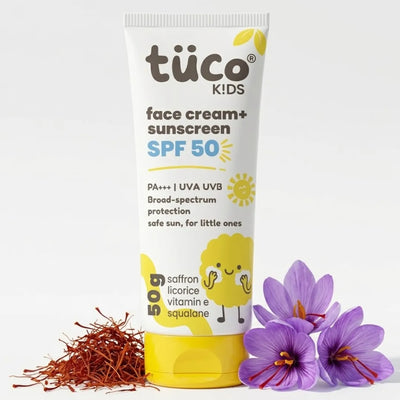
2-in-1 Sunscreen SPF 50:
- Combines moisturizer and sunscreen
- Designed for no white cast on all Indian skin tones
- SPF 50 protection
- Simplifies morning routine
Sports and outdoor play:
- SPF 50+ recommended
- Water-resistant essential
- Heavy-duty protection
- White cast less critical (short duration, active play)
- But still prefer no-cast for confidence
Swimming and water activities:
- Water-resistant (40 or 80 minutes rating)
- SPF 50+
- Reapplication every 40-80 minutes
- Gel Sunscreen for light, non-greasy feel
Extended outdoor exposure (sports day, picnics, travel):
- Maximum protection (SPF 50+)
- Water-resistant even if not swimming (sweat resistance)
- Reapply every 2 hours
-
Complete Sun Protection Kit:
- Multiple products for different needs
- Comprehensive protection
- Coordinated system
- Everything in one kit
SPF Selection Guide
SPF 30 vs SPF 50 considerations:
- SPF 30 blocks ~97% of UVB rays
- SPF 50 blocks ~98% of UVB rays
- Seems small difference, but that extra 1% matters
- Most people under-apply (use 25-50% of needed amount)
- SPF 50 under-applied still gives better protection than SPF 30 under-applied
Recommendation: SPF 50 for daily use on children, especially given application reality
For detailed SPF selection guidance: SPF 30 vs SPF 50: How to Pick the Right Sunscreen
Application Techniques to Minimize White Cast
Even the best mineral sunscreen dark skin kids can look white if applied incorrectly:
The Right Amount (Yes, It Matters)
The challenge: Need generous application for protection, but too much increases white cast.
The guideline:
- Face and neck: Two-finger length rule (squeeze sunscreen along two fingers)
- Each arm: One to two finger lengths
- Each leg: Two to three finger lengths
- Front torso: Three to four finger lengths
- Back torso: Three to four finger lengths
For children: Adjust based on body size, but don't skimp. Under-application is the #1 reason sunscreen "fails."
Multi-Layer Application Method
Instead of one thick layer (which creates white cast), apply 2-3 thin layers:
- First layer: Small amount, spread thinly over entire area
- Let absorb: Wait 30-60 seconds
- Second layer: Another thin layer
- Final layer: Touch-up any areas needing more
- Result: Better coverage, less white cast
Why it works: Thin layers absorb better. Multiple applications build adequate coverage without the visible thick film.
Proper Application Technique
The method:
- Dot sunscreen on forehead, cheeks, nose, chin
- Spread gently using fingertips in small circular motions
- Blend outward toward hairline and neck
- Pat to absorb: Gentle patting helps sink product in
- Check coverage: Look from different angles
- Don't forget: Ears, back of neck, tops of feet (if in sandals)
Avoid:
- Vigorous rubbing (can be irritating and uneven)
- Applying too much at once
- Rushing (takes 2-3 minutes for proper application)
- Skipping blend at hairline and jawline (creates obvious line)
Timing Matters
Apply 15-30 minutes before sun exposure:
- Gives product time to absorb and set
- Chemical sunscreens need time to activate
- Reduces immediate white appearance
- Allows for touch-up if needed
Don't rush: Hurried application as you're walking out the door leads to:
- Uneven coverage (some areas over-applied, some under)
- More visible white cast (no time to absorb)
- Streaky appearance
- Your child leaving with sunscreen still very visible
Product Recommendations: What Actually Works
Kids sunscreen without white cast india—specific products that deliver:
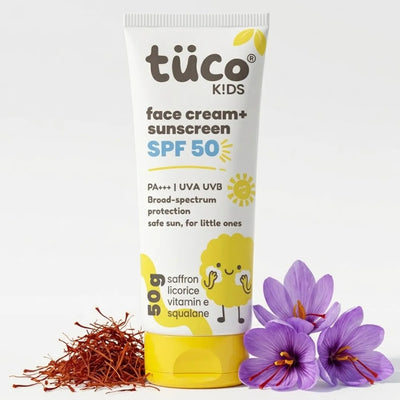
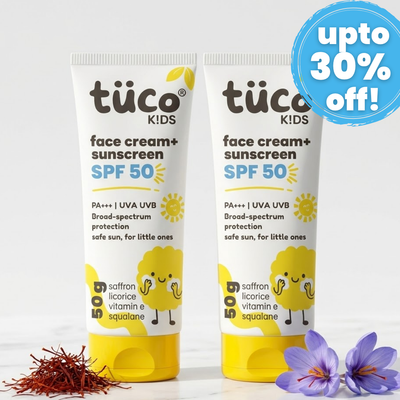
For Daily Use: 2-in-1 Sunscreen SPF 50
The 2-in-1 Sunscreen SPF 50 is specifically designed for Indian children's skin:
What makes it special:
- Specifically formulated for no white cast on all Indian skin tones
- Combines moisturizer and sunscreen (simplifies routine)
- SPF 50 broad spectrum protection
- Lightweight texture
- Fast absorption
- Suitable for all skin tones from fair to dark
- Ages 2+
Best for:
- Daily school use
- Children who resist complicated routines
- Parents wanting simple, effective option
- All Indian skin tones including sunscreen for brown skin children india
How to use:
- Apply after face wash, before getting dressed
- Generous amount (remember the two-finger rule for face)
- Blend thoroughly
- Wait 15 minutes before going outside
- Reapply every 2 hours if outdoors
For Active Kids: Gel Sunscreen
The Gel Sunscreen offers lightweight protection ideal for Indian climate:
Features:
- Gel formula (inherently less white cast)
- Ultra-lightweight feel
- Non-greasy
- Fast absorption
- Won't feel heavy in heat and humidity
- Non-comedogenic (won't clog pores)
Best for:
- Hot weather daily use
- Active children who sweat
- Sports and outdoor play
- Oily or combination skin
- Children who hate "heavy" sunscreen feel
Application:
- Small amount goes long way
- Spread thinly
- Absorbs almost instantly
- Can layer if needed for higher coverage
For Comprehensive Protection: Complete Sun Protection Kit
The Complete Sun Protection Kit provides everything needed:
What's included:
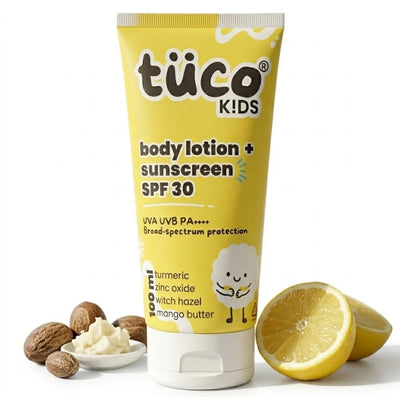
- Sun lotion for body
- SPF 50 sunscreen for face
- Coordinated formulations (work together)
- Complete sun protection system
Benefits of a kit:
- All products designed to work together
- Consistent formulation philosophy
- Appropriate for different body areas
- No guessing which products are compatible
- Value pricing
Best for:
- Families committed to comprehensive sun protection
- Children with significant outdoor exposure
- Parents wanting complete solution
- Summer vacation preparation
Reading Labels: What to Look For
Sunscreen for dark skin kids india shopping guide:
Active Ingredients
For no white cast, look for:
- "Micronized zinc oxide" (if mineral)
- "Nano zinc oxide" or "nano titanium dioxide"
- Chemical filters: avobenzone, octocrylene, octinoxate
- Hybrid formulas (combination of mineral and chemical)
Avoid if white cast is concern:
- "Non-micronized" or just "zinc oxide" without specifying particle size
- Very high percentages of mineral filters (25%+ zinc oxide)
- Old-style thick paste formulations
Formulation Type
Best for no white cast:
- Gels: Lightweight, transparent, fast-absorbing (like Gel Sunscreen)
- Fluids/lotions: Light texture, blend well
- Sprays: Invisible (but application challenges—hard to ensure adequate coverage)
More likely to have cast:
- Thick creams: Heavier, can be white
- Sticks: Very concentrated, often visible
- Pastes: Old-style, very white
Marketing Claims to Look For
Positive indicators:
- "No white cast"
- "Invisible finish"
- "Sheer coverage"
- "For all skin tones"
- "Tested on diverse skin tones"
- "Blends seamlessly"
Red flags:
- No mention of appearance/finish
- Claims like "natural white appearance fades" (it often doesn't)
- "Blend well" without specifics (too vague)
Additional Beneficial Features
Bonus features helpful for children:
- Broad spectrum: Protects against both UVA and UVB (non-negotiable)
- Water-resistant: 40 or 80 minutes (for active kids)
- Non-comedogenic: Won't clog pores (prevents breakouts)
- Fragrance-free: Reduces irritation risk
- Hypoallergenic: Lower allergy risk
- Pediatrician-tested: Formulated with children in mind
Common Mistakes (And How to Fix Them)
Mistake 1: Using Too Much at Once
The error: Squeezing large amount and trying to spread it all at once.
Why it causes white cast: Thick layer can't absorb properly, sits on surface looking white.
The fix:
- Use recommended amount but apply in thin layers
- Multiple thin coats better than one thick one
- Build coverage gradually
- Each layer absorbs before next
Mistake 2: Not Allowing Absorption Time
The error: Applying and immediately getting dressed or going outside.
Why it's problematic: Sunscreen hasn't set, transfers to clothes, looks white, may not protect fully.
The fix:
- Apply 15-30 minutes before sun exposure
- Let it absorb and set
- Will look more natural after absorption time
- Plan this into your morning routine
Mistake 3: Wrong Formula for Skin Type
The error: Heavy cream on oily skin, or gel on very dry skin.
Why it matters:
- Heavy cream on oily skin: won't absorb, looks greasy and white
- Light gel on very dry skin: may not provide enough moisturization
The fix:
- Oily skin: Gel or fluid formulas (Gel Sunscreen)
- Dry skin: Lotion or cream (but still lightweight)
- Combination: Lightweight lotion or 2-in-1 formula
Mistake 4: Uneven Application
The error: Some areas too much product, others too little.
Result: Streaky white appearance, uneven protection.
The fix:
- Dot product evenly across area before spreading
- Use systematic approach (don't randomly apply)
- Check in mirror from different angles
- Blend thoroughly at all edges and transitions
Mistake 5: Giving Up on Sun Protection Due to White Cast
The biggest error: Skipping sunscreen entirely because past products left white cast.
The consequences:
- No UV protection
- Cumulative sun damage
- Increased skin cancer risk
- Hyperpigmentation and premature aging
- Missed opportunity for lifelong healthy habits
The fix:
- Try modern formulations like 2-in-1 Sunscreen SPF 50
- Technology has advanced significantly
- Products exist that work for dark skin
- Don't let past disappointment stop you from protecting your child
Addressing the Emotional and Cultural Dimensions
Sun protection dark complexion kids india isn't just practical—it's emotional:
Colorism and Its Impact
The harmful reality:
- Indian culture historically values lighter skin
- Children internalize these messages early
- Fairness creams still marketed aggressively
- Dark skin treated as less beautiful, less desirable
How white cast compounds the problem:
- Makes child's dark skin more visible (ironic and harmful)
- Can feel like trying to lighten their skin
- Subject to teasing about appearance
- Reinforces colorism rather than celebrating their natural tone
The parenting approach:
- Choose products that respect their skin tone
- Don't reinforce colorism through sunscreen choice
- Explain sun protection is about health, not appearance
- Celebrate all skin tones as beautiful
- Make sun care about protection, not "fixing" their color
Peer Pressure and Social Acceptance
School-age realities:
- Children notice and comment on differences
- "Ghost face" or similar teasing occurs
- Visible white cast makes child stand out
- Refusing sunscreen becomes about social survival
Supporting your child:
- Provide truly no-cast options
- Validate their feelings (don't dismiss embarrassment)
- Explain why protection matters despite peer pressure
- Empower them with knowledge
- Let older kids choose products (from safe options)
Building Positive Sun Protection Habits
Make it feel good:
- Products that blend into their skin naturally
- Fast, easy application (not a battle)
- Part of self-care routine, not punishment
- Age-appropriate autonomy in product choice
Long-term benefit: Child who uses sunscreen comfortably as a kid becomes adult with ingrained sun-safe habits.
Budget Considerations
Sunscreen for brown skin children india at various price points:
Understanding the Cost
Why quality no-cast sunscreens cost more:
- Advanced formulation (micronized particles, hybrid blends)
- Research and development for diverse skin tones
- Better quality ingredients
- Extensive testing on various complexions
- More expensive manufacturing processes
Is It Worth It?
Cost-benefit analysis:
- Child actually wears it = priceless
- Prevents sun damage = saves future costs (dermatologist visits, treatments)
- Daily use means one bottle lasts 1-2 months
- Compare: ₹800 bottle used daily vs. ₹300 bottle sitting unused (waste)
The math:
- ₹800 sunscreen lasting 2 months = ₹13/day
- Cost of untreated hyperpigmentation, early aging, skin cancer screening/treatment = thousands to lakhs over lifetime
- Prevention is the most economical choice
Making It Affordable
Budget strategies:
- Buy larger sizes (better per-ml value)
- Use for face/exposed areas primarily (clothing protects covered body)
- Share among siblings of similar age/skin tone
- Take advantage of sales and bundles
- Compare cost-per-day, not just bottle price
Kits as value: Complete Sun Protection Kit provides multiple products at better combined pricing than buying separately.
What Not to Compromise On
Non-negotiables regardless of budget:
- Broad spectrum protection
- SPF 30 minimum (50 recommended)
- Age-appropriate formulation
- From reputable, safety-tested brand
Can compromise on:
- Fancy packaging
- Brand prestige (vs. formulation quality)
- Extra features (as long as basics covered)
The Bottom Line
Does sunscreen for kids with dark skin exist that doesn't leave white cast?
Absolutely yes.
The Reality Today
Modern sunscreen technology has advanced significantly:
- Micronized particles
- Gel formulations
- Chemical and hybrid options
- Products specifically designed for Indian skin tones
- No more choosing between protection and appearance
Best Options Available Now
For daily use: 2-in-1 Sunscreen SPF 50
- Specifically designed for no white cast on all Indian skin tones
- Combines moisturizer and SPF (simplified routine)
- Perfect for school and daily activities
For lightweight feel: Gel Sunscreen
- Gel formula (minimal to no white cast)
- Non-greasy, fast-absorbing
- Ideal for hot, humid climate
- Great for active kids
For complete protection: Complete Sun Protection Kit
- Multiple products for different needs
- Comprehensive approach
- Everything coordinated
The Promise
Your child can have:
- ✓ Effective UV protection (SPF 50 broad spectrum)
- ✓ No white cast (products blend naturally)
- ✓ Comfort (lightweight, non-greasy)
- ✓ Dignity (no embarrassing appearance)
- ✓ Healthy skin (protected from sun damage)
No more ghost face. No more refusing sunscreen. No more choosing between health and feeling comfortable in their own skin.
Moving Forward
If past sunscreens failed your child due to white cast:
- Don't give up on sun protection
- Technology and formulations have improved dramatically
- Products exist that work for sunscreen for wheatish skin kids and darker tones
- Your child deserves both protection and confidence
Starting today:
- Choose appropriate products for your child's skin tone
- Apply properly (thin layers, absorption time)
- Make it routine (daily, non-negotiable)
- Celebrate their beautiful skin while protecting it
- Set them up for lifetime of sun-safe habits
The goal: Raising children who protect their skin naturally, without embarrassment, because they have products that respect their complexion while keeping them safe.
That's not too much to ask. And now, it's absolutely achievable.
For comprehensive sun protection guidance: