



Ski Trip Sunscreen for Kids: Protecting Children from Snow Reflection and UV Rays
Planning a ski vacation to the Himalayas or other mountain destinations? While skiing creates magical winter memories for families, it also exposes children to extreme UV radiation levels. Understanding proper sun protection and application techniques keeps young skin safe during mountain adventures.

Why Ski Trips Need Extra Sun Protection
Indian families heading to popular ski destinations like Gulmarg, Auli, or Manali often overlook sun protection. The excitement of snow sports overshadows the reality that mountain slopes are UV danger zones. Children's delicate skin faces serious damage from altitude, snow reflection, and extended outdoor time.
The Altitude Factor
UV radiation intensity increases approximately 10-12% for every 1,000 feet of elevation gain. Most hill stations and ski areas in India operate at high altitudes, meaning UV exposure is significantly stronger than at sea level. This dramatic increase affects children's delicate skin even faster than adult skin. At high altitude, thinner atmosphere provides less natural UV filtering. Children skiing or snowboarding all day experience UV doses equivalent to multiple summer days.
Snow Reflection Doubles UV Exposure
Fresh snow reflects up to 80% of UV radiation, creating a two-directional attack on exposed skin. Children receive UV rays from direct sunlight above and reflected rays from snow below. This doubles effective UV exposure compared to non-reflective surfaces. Snow reflection particularly affects areas parents often miss: under chin, inside ears, and nose undersides.
Extended Outdoor Duration
Ski days often span 6-8 hours of continuous outdoor exposure. Unlike brief winter outdoor play, skiing keeps children outside during peak UV hours without breaks. This extended exposure multiplies damage potential significantly.
Choosing the Best Sunscreen for Skiing Kids
SPF 50+ Is Essential
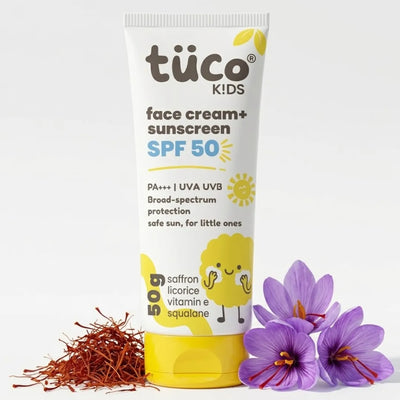
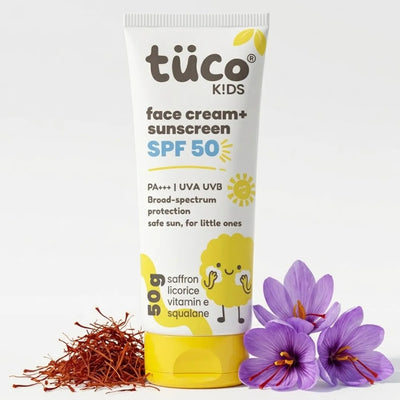
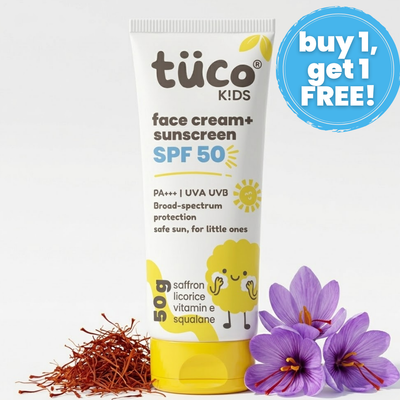
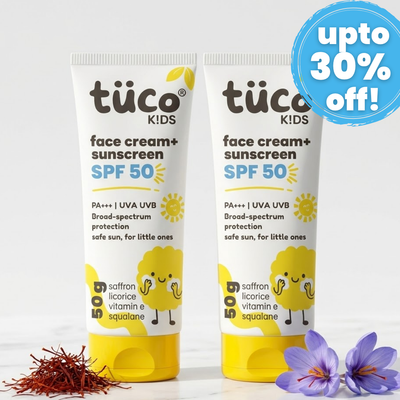
For ski conditions, SPF 50 sunscreen for kids represents the minimum protection level needed. SPF 50 blocks approximately 98% of UVB rays, while lower SPF values leave children vulnerable to altitude-amplified UV radiation.
Broad-Spectrum Protection
Choose broad-spectrum sunscreens that protect against both UVA and UVB radiation. UVA rays cause long-term skin damage, while UVB rays cause immediate sunburn. High-altitude exposure intensifies both types, making broad-spectrum coverage essential.
Water-Resistant Formulas
Snow activities involve moisture from falling snow, sweating inside layers, and occasional tumbles. Water-resistant sunscreens maintain protection despite these factors. Look for formulas rated for 80 minutes of water resistance. Keep travel-size sunscreen accessible in jacket pockets for quick reapplication on slopes.
Cold-Weather Formula
Regular sunscreens can freeze or become too thick to apply in extreme cold. Ski sunscreen should work at low temperatures, have non-greasy texture, quick absorption without white residue, moisturizing properties to prevent dry skin, and non-stinging formulas that won't irritate eyes.
Mineral vs Chemical Sunscreens for Skiing
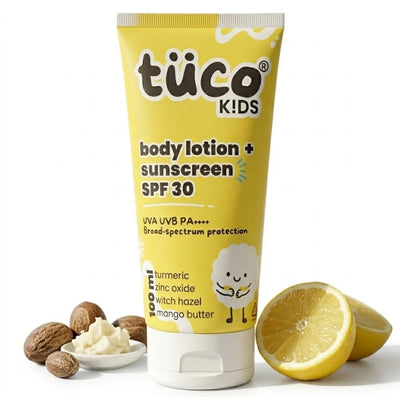
Mineral-based sunscreens containing zinc oxide or titanium dioxide create physical barriers on skin that reflect UV rays. They work immediately upon application—critical for quick morning preparations before hitting slopes. Benefits include instant protection without waiting period, less likely to irritate sensitive cold-exposed skin, stay effective at extreme temperatures, and safe for all ages including babies over 6 months.
How to Apply Sunscreen for Ski Days
Morning Application
Apply sunscreen 20-30 minutes before going outside, allowing proper absorption. In cold rooms, warm sunscreen bottles in hands before application to improve spreadability. Start with clean, dry face, apply moisturizer first if skin is very dry, use one full teaspoon for face and neck, don't forget ears, nose, chin, and forehead, apply SPF lip balm generously, and cover hands if not wearing gloves.
Critical Areas Parents Miss

Certain facial zones frequently get overlooked but receive intense UV exposure during skiing: tops and rims of ears, under chin and neck, inside ears, under nose, hairline and part line, and back of neck above collar. Snow reflection targets these typically shaded areas.
Reapplication During Skiing
Midday breaks provide perfect opportunities for thorough sunscreen reapplication. Remove helmets, goggles, and face coverings to access all areas. Fresh sunscreen ensures afternoon protection. Warm up indoors before applying, pat face dry from sweat before reapplying, check for missed areas from morning application, and reapply lip balm after eating.
Friction from helmets, goggles, and scarves removes sunscreen throughout the day. Keep stick or tube sunscreen in easily accessible jacket pockets. Reapply to high-friction zones: nose bridge where goggles sit, cheeks exposed below goggles, chin area above neck gaiter, and forehead above goggle strap.
Complete Sun Protection Kit for Ski Trips
Essential Products to Pack
A comprehensive sun protection kit ensures your family stays safe throughout the vacation. Pack SPF 50+ broad-spectrum sunscreen for morning application, travel-size tubes for pocket carry (one per family member), SPF stick for quick touchups, SPF 30+ lip balm with multiple backups, moisturizing body lotion for evening use to soothe dry skin, and treatment gel for any skin irritation.
Combining Sunscreen with Physical Barriers
While sunscreen provides crucial UV protection, physical barriers add extra defense. Combine sunscreen with neck gaiters or balaclavas covering lower face, helmet with extended visors or brims, UV-blocking ski goggles covering eye area, and face masks with UPF protection. Apply sunscreen under all physical barriers as they shift during activities.
Eye Protection
Eyes need UV protection as much as skin. Ensure children wear properly rated ski goggles or sunglasses with 100% UV protection, category 3 or 4 lenses for bright snow conditions, wraparound styles preventing peripheral UV entry, and anti-fog coating for clear vision.
Age-Specific Strategies
Protecting Young Children
Young children learning to ski require extra attention. They spend more time sitting or lying in snow, increasing reflected UV exposure. Apply generous amounts of baby-safe sunscreen every 90 minutes for toddlers. Choose tear-free formulas that won't sting if accidentally rubbed into eyes.

School-Age Children
Older children skiing with friends or in lessons need their own sunscreen supplies. Pack travel-size tubes in jacket pockets with reminders to reapply. Teach proper application technique before trips: use enough product, cover all exposed areas thoroughly, reapply every 2 hours minimum, and apply extra after falls or heavy sweating.
Teenagers
Teenagers often resist sunscreen, viewing it as unnecessary. Emphasize both immediate concerns like painful burns and long-term effects. Provide appealing sunscreen options: non-greasy formulas, sport-specific brands, stick applicators for easy use.
Recognizing Ski Sunburn
Ski sunburn often goes unnoticed during activities because cold numbs pain receptors. Children may not feel burning until returning indoors. Watch for pink or red skin (especially on face), warm-to-touch areas despite cold exposure, tenderness when removing helmets or goggles, unusual patterns matching equipment edges, and complaints of tight facial skin.
If sunburn occurs, move child indoors immediately, apply cool damp cloths to burned areas, give pain reliever for discomfort, apply aloe vera or moisturizing lotion, keep child well-hydrated, and avoid further sun exposure until healed.
Building Sun Safety Habits
Establish sunscreen application as automatic as putting on ski boots. Create pre-slope routines that include breakfast, sunscreen application, base layers, ski gear, and pocket sunscreen check. Teach children why sun protection matters at high altitudes. Explain altitude effects, snow reflection, and long-term skin health. Understanding the reasons increases compliance and builds lifelong habits.
Ski vacations expose children to extreme UV conditions that demand serious sun protection. The combination of altitude, snow reflection, and extended outdoor time creates conditions for severe skin damage. Choose SPF 50+ broad-spectrum, water-resistant formulas designed for cold conditions. Apply generously before going outside, reapply every two hours, and add touchups after breaks and heavy activity. Combine sunscreen with physical protection like goggles, face coverings, and hats. The sun protection habits you establish during mountain trips protect children's skin throughout their lives.