



Fun Skincare Games & Activities to Teach Kids Healthy Habits at Home
"Mom, do I HAVE to wash my face?" Your 8-year-old whines for the third time this week. The nightly skincare routine has become a battle—reminders, nagging, resistance. Meanwhile, you know that establishing good habits now matters: sun protection, proper cleansing, moisturizing. But how do you make a child care about something that seems boring, unnecessary, and just one more thing to do?
The answer isn't more lectures about why skincare matters. It's not bribes or threats. It's making skincare so fun, so engaging, that children want to participate. When washing their face becomes a game, when applying sunscreen is part of a scavenger hunt, when learning about moisturizer happens through storytelling—suddenly, resistance transforms into enthusiasm.
Teaching kids about skincare doesn't have to be boring. By incorporating fun skincare games and activities, you can make learning about healthy skin habits an enjoyable experience. This guide explores various engaging activities that can help your children develop a love for skincare while keeping them entertained at home—turning daily routines into quality bonding time and building habits that will last a lifetime.
Why Teaching Skincare Through Play Works
The psychology behind playful learning:
Children Learn Best Through Play
Developmental reality:
- Play is children's primary learning mechanism
- Hands-on activities create stronger memories than lectures
- Fun experiences = positive associations
- Repetition through games builds habits naturally
The skincare connection: If children associate skincare with fun games and quality time with parents, they're exponentially more likely to maintain routines independently as they grow.
Making the Abstract Concrete
The problem with skincare education:
- Benefits are long-term (preventing sun damage, aging—meaningless to 7-year-olds)
- Consequences of neglect aren't immediately visible
- "Healthy skin" is abstract concept
Games solve this: They make skincare tangible, immediate, and rewarding right now.
Building Intrinsic Motivation
External motivation (nagging, rewards):
- Works short-term
- Requires constant parental involvement
- Stops when external pressure stops
Intrinsic motivation (genuine interest):
- Sustainable long-term
- Leads to independent habit formation
- Created through positive, enjoyable experiences
Play builds intrinsic motivation: Children do skincare because they enjoy it, not because you're making them.
Why Healthy Skin Habits Matter for Kids
Before the games, understanding the "why":
Children's Skin Is Uniquely Vulnerable
Structural differences:
- 20-30% thinner than adult skin
- Higher permeability (absorbs more)
- Still-developing protective barrier
- More reactive to irritants and sun damage
- Lower natural oil production
What this means: Damage occurs more easily and can have longer-lasting effects. Early protection and care matter enormously.
Cumulative Sun Damage Starts in Childhood
The sobering statistics:
- 80% of lifetime sun exposure occurs before age 18
- Childhood sunburns significantly increase skin cancer risk
- UV damage is cumulative and irreversible
- Early protection = dramatic long-term benefit
The habit gap: Many adults wish they'd started sun protection earlier. Teaching children now gives them decades of protection.
Early Habits Become Lifelong Patterns
Neurological reality: Habits formed in childhood are strongest and most enduring.
Skincare habits established by age 10-12:
- Daily face washing
- Sun protection
- Moisturizing
- Gentle cleansing
Likely to continue throughout life: Becoming automatic, requiring no conscious effort.
Teaching now = protecting forever.
Beyond Vanity: Health and Confidence
Healthy skin supports:
- Physical comfort (no dryness, itching, irritation)
- Infection prevention (proper cleansing, wound care)
- Confidence (clear, healthy-looking skin during self-conscious years)
- Body autonomy (understanding and caring for own body)
This isn't about beauty standards—it's about health, comfort, and self-care skills.
Fun Skincare Games and Activities
Making skincare education engaging:
1. DIY Skincare Crafting Sessions
The appeal: Children love making things, especially things they can use.
Activity: Natural Face Mask Creation
What you need:
- Plain yogurt (moisturizing, soothing)
- Honey (antimicrobial, hydrating)
- Oatmeal (gentle exfoliation, calming)
- Small bowls and spoons
- Headbands or hair clips
How it works:
Step 1: Explain ingredients (5 minutes)
- "Yogurt has special ingredients that make skin soft"
- "Honey fights germs and keeps skin healthy"
- "Oatmeal is gentle and calms irritated skin"
- Keep explanations simple, age-appropriate
Step 2: Let kids measure and mix (10 minutes)
- 2 tablespoons yogurt
- 1 tablespoon honey
- 1 tablespoon ground oatmeal
- Children do the mixing (sensory, fun)
Step 3: Application (5 minutes)
- Pull hair back
- Apply mask together (you do one too—bonding!)
- Look in mirror, laugh at how funny you look
- Take silly photos
Step 4: Wait and relax (10-15 minutes)
- Read a story
- Listen to music
- Talk about how skin feels (cool, smooth)
Step 5: Rinse off (5 minutes)
- Lukewarm water
- Gentle removal
- Pat dry
- Feel how soft skin is!
Learning happens: Children see that skincare can be fun, creative, and something you do together. They understand that different ingredients have different benefits. They experience how good proper skin care feels.
Variation: Make lip balms, sugar scrubs, or bath soaks with safe, simple ingredients.
Safety note: Always patch test first. Supervise to ensure products don't go in eyes or mouth.
2. Skincare Bingo
The appeal: Children love games, winning, and visual tracking of progress.
Activity: Daily Skincare Bingo
What you need:
- Printed Bingo cards (5x5 grid)
- Markers or stickers
- Small prizes
How to create:
Bingo squares include:
- "Wash face in morning"
- "Apply sunscreen before going outside"
- "Use moisturizer after bath"
- "Wash hands before touching face"
- "Drink water (for skin hydration)"
- "Wear hat in sun"
- "Don't pick at skin"
- "Gentle face patting (not rubbing)"
- "Clean face before bed"
- "Use gentle soap"
- "Apply lip balm"
- "Take off dirty clothes after play"
Free space: "Smile at yourself in mirror" (building confidence!)
How it works:
Daily play:
- Each day, child marks off completed tasks
- When they get 5 in a row (horizontally, vertically, or diagonally), they win
- Prize can be: choosing dinner, extra story, small toy, special activity
Weekly version:
- Larger card
- Week-long tracking
- Bigger prize at end
Learning happens: Skincare becomes a game. Visual tracking shows progress. Rewards create positive associations. Children remember tasks because they're watching for them.
Adaptation for multiple children: Create competitive or cooperative versions. Family Bingo where everyone works together to fill one large card.
3. Skincare Storytime
The appeal: Children love stories, especially ones where they can relate to characters.
Activity: Skincare-Themed Story Reading
Book ideas (read or create):
- "The Sunscreen Adventure": Character forgets sunscreen, gets burned, learns importance
- "Princess Glowing Skin": Princess discovers that healthy skin comes from good care, not magic
- "Detective Dryness": Mystery-solving character figures out why skin is dry (not moisturizing!)
- "The Soap That Wasn't Too Strong": Finding the right gentle soap for sensitive skin
If books unavailable: Make up stories featuring your child as the main character.
How it works:
Before reading:
- "Tonight's story is about a girl just like you who learned something important about taking care of her skin"
During reading:
- Pause to discuss: "What do you think she should do?"
- Relate to child's life: "Do you sometimes forget sunscreen like she did?"
- Point out lessons: "See how her skin feels better when she uses the gentle soap?"
After reading:
- "What did we learn from this story?"
- "How can we use this in our skincare routine?"
- Connect story lesson to actual products you use
Learning happens: Abstract concepts (sun damage, importance of moisturizing) become concrete through narrative. Characters model good behavior. Stories are memorable—children recall lessons when they encounter real situations.
Bonus: Write stories together. "Today we're going to write a story about a superhero whose power is healthy skin!"
4. Skincare Scavenger Hunt
The appeal: Children love searching, finding, and the excitement of treasure hunts.
Activity: Product Scavenger Hunt
What you need:
- Clues (written or picture-based for younger children)
- Skincare products hidden around bathroom/house
- Small prize at end
How to set up:
Hide products around the space:
- Gentle cleanser
- Moisturizer
- Sunscreen
- Lip balm
- Gentle soap
- Soft towel
- Hairbrush
Create clues leading from one to the next:
- "Start where you brush your teeth—look near the sink for something that cleans your face gently"
- "Now find the cream that keeps skin from getting dry—it's in the cabinet"
- "Hunt for the most important thing that protects from sun—it's on the shelf"
Include educational hints: "This product has SPF 50—what does SPF mean?"
How it works:
The hunt (15-20 minutes):
- Child follows clues
- Finds each product
- You explain what it is and why it's used as they find it
- Move to next clue
At the end:
- Review all products found
- Explain how they work together as a routine
- "See? Each product has a special job in keeping your skin healthy!"
Learning happens: Children learn what products exist, where they're kept, and what each does. The excitement of hunting makes them engaged and attentive to explanations. They build familiarity with products they'll use.
Variation: "Routine Race"—time how fast they can complete their actual skincare routine correctly. Beat their own time (not competitive with siblings—encourages rushing).
5. Skincare Role-Playing
The appeal: Children love pretend play, especially playing "grown-up" roles.
Activity: Dermatologist's Office
What you need:
- White coat or lab coat (optional)
- Play stethoscope or magnifying glass
- Notepad and pencil
- Skincare products (gentle, safe ones)
- Stuffed animals or dolls as "patients"
How to set up:
Create "clinic" space:
- Designated area in bathroom or bedroom
- Chair for "patient"
- Table for "equipment"
Roles:
- Child is dermatologist (or beauty expert/esthetician)
- You or stuffed animals are patients
- Rotate roles
How it works:
Scenario 1: Dry skin patient:
- Stuffed bear comes in: "My skin is so dry and itchy!"
- Child-dermatologist examines
- You prompt: "What do you think will help? What product should we use?"
- Child recommends moisturizer, demonstrates application
Scenario 2: Sunburn patient:
- Doll had too much sun
- Child-dermatologist: "Did you use sunscreen?"
- Discuss prevention and treatment
- Apply (pretend) aloe vera
Scenario 3: Tangled hair patient:
- Stuffed animal's "hair" is tangled
- Child recommends gentle detangling, conditioner use
- Demonstrates proper brushing technique
Learning happens: Role-playing cements knowledge (teaching others is best way to learn). Children practice problem-solving ("What does this patient need?"). They gain confidence in skincare knowledge. They see you valuing their "expertise."
Extension: Let them give YOU skin advice and "treatment." Follow their instructions (within reason) to validate their knowledge.
6. Skincare Product Matching Game
The appeal: Memory games, matching, visual learning.
Activity: Product Purpose Match
What you need:
- Cards with product pictures (or actual small products)
- Cards with purposes/benefits
- Flat surface for playing
How to create:
Product cards:
- Sunscreen
- Moisturizer
- Gentle cleanser
- Lip balm
- Soap
- Hair conditioner
Purpose cards:
- "Protects from sun"
- "Keeps skin soft and hydrated"
- "Washes face gently"
- "Prevents chapped lips"
- "Cleans body"
- "Makes hair smooth and tangle-free"
How it works:
Memory game version:
- All cards face-down
- Flip two at a time
- Try to match product with purpose
- If match: explain how it works and keep pair
- If no match: flip back over
Quick match version:
- Lay product cards face-up
- Show purpose card
- Child identifies which product matches
- Discuss why
Learning happens: Children memorize what each product does. Visual association strengthens memory. Repetition through gameplay reinforces learning without feeling like studying.
Advanced version: Add ingredient cards ("Aloe vera matches which product?" "Magic Gel!") or skin concern cards ("Dull skin needs which products?").
7. Before & After Photo Challenge
The appeal: Visual proof, documentation, seeing change.
Activity: Skin Health Photo Tracking
What you need:
- Camera or smartphone
- Consistent lighting
- Chart or journal
How it works:
Week 1:
- Take photos of child's skin (face, any dry patches, etc.)
- Start new skincare routine consistently
- Take weekly photos in same lighting
Weeks 2-4:
- Continue routine
- Weekly photos
- Child notices changes: "My dry patch is smaller!" "My skin looks brighter!"
At 4 weeks:
- Compare first and last photos
- Celebrate improvements
- Discuss what routine accomplished
Learning happens: Children see concrete results of their efforts. Visual proof that skincare works motivates continued practice. They learn patience (results take time). They develop pride in caring for themselves.
Important: Frame positively. Focus on "healthy" and "improved," never "bad" or "ugly." This builds healthy relationship with appearance.
8. Skincare Song and Dance Routine
The appeal: Music, movement, creativity, memory through rhythm.
Activity: Morning Routine Song
How to create:
Pick familiar tune ("If You're Happy and You Know It," "Twinkle Twinkle," etc.)
Write skincare lyrics: To "If You're Happy and You Know It":
- "If you want healthy skin, wash your face" (mime washing)
- "If you want healthy skin, wash your face" (mime washing)
- "Use gentle soap and water, rinse and make it wetter"
- "If you want healthy skin, wash your face" (mime washing)
Additional verses for sunscreen, moisturizer, etc.
How it works:
- Sing together while doing routine
- Add hand motions for each step
- Make it silly and fun
- Child starts singing it independently
Learning happens: Rhythm and melody enhance memory. Physical movements create muscle memory. Routine becomes automatic through repetition. Singing makes boring tasks fun.
Variation: Let child create their own song. Record it. Play it during routine.
Age-Appropriate Adaptations
Tailoring activities to developmental stages:
Ages 3-5 (Preschool)
Capabilities:
- Short attention span
- Learn through sensory exploration
- Love repetition and routine
- Concrete thinking
Best activities:
- Very simple DIY crafts (one-ingredient projects)
- Picture-based scavenger hunts
- Short story time with lots of visuals
- Songs with motions
- Role-play with stuffed animals
Keep it:
- Brief (5-10 minutes)
- Sensory (feeling textures, smelling scents)
- Repetitive (same activity multiple times)
- Supervised closely
Ages 6-8 (Early Elementary)
Capabilities:
- Longer focus
- Beginning to read
- Enjoy games with rules
- Can follow multi-step instructions
Best activities:
- Bingo (can track independently)
- Simple scavenger hunts with written clues
- DIY crafting with multiple ingredients
- Role-playing scenarios
- Matching games
- Story creation
Keep it:
- Structured (clear rules)
- Achievement-oriented (winning, completing)
- Social (involve siblings or parents)
Ages 9-12 (Pre-teens)
Capabilities:
- Complex thinking
- Self-conscious about appearance
- Desire for independence
- Can understand long-term consequences
Best activities:
- Advanced DIY (multi-step recipes)
- Photo tracking challenges
- Detailed role-playing (pretend clinic with "appointments")
- Creating their own games/activities
- Research projects (comparing products)
Keep it:
- Relevant to their concerns (emerging breakouts, oily skin)
- Independent (they lead, you support)
- Results-focused (they see benefits)
Teens (13+)
Capabilities:
- Abstract thinking
- Concerned with peer perception
- Desire full autonomy
- Understand science and long-term planning
Best activities:
- Product comparison research
- Ingredient education (reading labels)
- Routine customization (creating their perfect regimen)
- Before/after tracking with detailed journaling
- Teaching younger siblings (reinforces their knowledge)
Keep it:
- Respectful of independence
- Science-based (they appreciate data)
- Personalized (their skin, their choices)
Incorporating Products Naturally
Making specific products part of games:
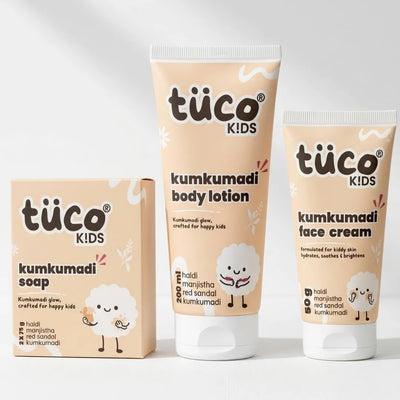
Kumkumadi Glow Kit
In scavenger hunt: "Find the face wash that fights dullness and the cream that makes skin glow!"
In role-play: "This patient has dull skin from playing outside. Which products should we recommend?"
In matching game: Card says "Brings out natural glow" → child matches to Kumkumadi products
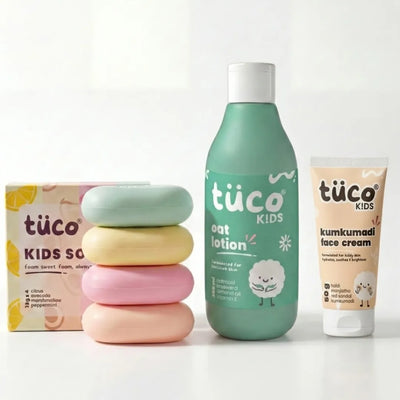
Ultimate Dull Skin Kit
In Bingo: "Use soap from Dull Skin Kit," "Apply SPF 50 from kit," "Use face cleanser before bed"
In crafting: Explain how this complete kit is like a recipe—each product works together
In before/after photos: Track improvements specifically using this coordinated system
Kumkumadi Glow Kit (Alternate)
In story time: "The character used special ingredients like saffron and turmeric to make her skin healthy—just like in this kit!"
In routine songs: Create verses about each product in the kit
Practical Tips for Success
Making games sustainable long-term:
Start Small and Build
Don't overwhelm:
- One new game per week
- Simple versions first, add complexity later
- Let child request repeats of favorites
Build slowly: As novelty wears off one activity, introduce next.
Make It Routine, Not Occasional
Weekly schedule example:
- Monday: Bingo (quick, daily tracking)
- Wednesday: Story time with skincare theme
- Friday: Craft session or scavenger hunt
- Sunday: Role-playing or photo check-in
Consistency matters more than variety.
Let Children Lead
Follow their interests:
- Love art? Focus on DIY crafting
- Love games? Emphasize Bingo and hunts
- Love stories? Read and create more narratives
Their enthusiasm drives sustainability.
Celebrate Small Wins
Notice and praise:
- "You remembered sunscreen without being asked!"
- "Your skin looks so healthy from using moisturizer!"
- "You're becoming a skincare expert!"
Positive reinforcement builds intrinsic motivation.
Be Patient with Resistance
Some days they won't want to:
- That's okay—don't force
- Try different activity next time
- Model good habits yourself
- Resistance often temporary
Long game: Building habits over months, not perfection daily.
The Bonding Benefit
Beyond skincare education:
Quality Time Together
These activities provide:
- One-on-one attention
- Shared experience
- Laughter and fun
- Screen-free connection
Children remember: "Mom and I used to make face masks together" long after they've forgotten specific skincare facts.
Building Trust
When you engage playfully:
- Children see you value their interests
- They feel respected (not just lectured)
- They're more likely to come to you with concerns
- Foundation for open communication in teen years
Skincare games today = trusted conversations about body changes tomorrow.
Teaching Life Skills
Beyond skincare, children learn:
- Self-care is important
- Taking care of body is their responsibility
- Health requires daily attention
- Making routines enjoyable makes them sustainable
These lessons apply to nutrition, exercise, sleep, mental health—all self-care.
The Bottom Line
Making skincare fun = making skincare work:
Children Won't Do What They Hate
Nagging and forcing:
- Creates negative associations
- Requires constant parental energy
- Stops when you stop enforcing
- Builds resentment
Play and fun:
- Creates positive associations
- Builds intrinsic motivation
- Becomes self-sustaining
- Builds happy memories
The choice is clear.
The Activities That Work
From this guide:
- DIY crafting sessions (face masks, scrubs)
- Skincare Bingo (daily tracking game)
- Story time (learning through narrative)
- Scavenger hunts (finding and learning about products)
- Role-playing (dermatologist/patient scenarios)
- Matching games (products to purposes)
- Photo tracking (seeing results)
- Songs and routines (memory through music)
Pick what fits your child and your family.
The Long-Term Investment
Time spent now playing skincare games:
- Builds habits lasting lifetime
- Protects skin from cumulative damage
- Creates confident, informed children
- Establishes foundation for all self-care
30 minutes weekly of skincare games now = decades of healthy habits later.
The Products That Support This
Complete care systems make games easier:
- Kumkumadi Glow Kit: Face wash + cream for glowing skin
- Ultimate Dull Skin Kit: Complete routine in coordinated system
- Kumkumadi Glow Kit (Alternate): Comprehensive glow-focused care
Having right products makes activities effective—you're teaching routines they'll actually use.
Start Today
Pick one activity:
- This weekend, try DIY face masks
- Tonight, play skincare Bingo
- Tomorrow, start a scavenger hunt
Make it fun: Your enthusiasm is contagious.
Be consistent: One activity weekly, building habits gradually.
Enjoy the process: This is quality time, not just skincare education.
Incorporating fun skincare games and activities at home can make learning about skincare enjoyable for kids. These activities not only teach important skin health habits but also create bonding opportunities for you and your child. By making skincare fun and interactive, you can help your kids develop a lifelong appreciation for taking care of their skin.
Your child's resistance to face-washing can transform into "Can we make face masks tonight?" Their eye-rolls at sunscreen reminders can become "I already put it on!" Their neglected skin routine can become a source of pride: "Look how healthy my skin looks!"
The secret isn't better products (though those help). It's making skincare so fun that children want to do it—not because you're making them, but because they genuinely enjoy it.
That's the power of play. And that's how you build habits that last a lifetime.
Related Resources: