



Child Skin Allergy Treatment at Home: Safe and Effective Remedies Every Parent Can Try
A red, itchy patch on your child's skin is unsettling, but most skin allergy in kids reactions — contact rashes, mild hives, heat rash — are genuinely manageable with the right first steps of child skin allergy treatment at home. The part that matters most is knowing which small number of cases aren't home-manageable, and need help fast rather than a home remedy.
This guide covers the full picture of child skin allergy treatment — what different reactions look like, what actually helps, how to prevent repeat flare-ups, and the specific signs that mean it's time to stop trying remedies and get medical help.
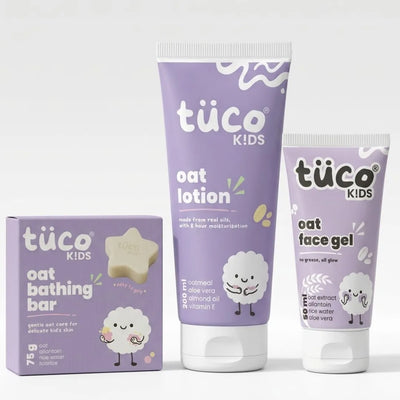
Tuco Kids tip: Once a reaction has calmed down, switching to a genuinely fragrance-free, sulphate-free skin allergy treatment for child routine reduces how often it happens again.
Shop 3-in-1 Oat Kit →

Contents
- Quick Comparison: Tuco Products for Reactive Skin
- Types of Skin Allergies in Kids: What They Look Like
- Preventing Repeat Flare-Ups
- First-Line Home Remedies
- Decision Tree: What Kind of Reaction Is This?
- When It's an Emergency — Not a Home Remedy
- FAQs
- Related Reads
Quick Comparison: Tuco Products for Reactive Skin
| Product Name | Key Features | Price | Shop |
|---|---|---|---|
| 3-in-1 Oat Kit | Oat- and aloe-based bathing bar, lotion & face gel — the gentlest option for reactive or allergy-prone skin | Rs. 699 | Shop Now → |
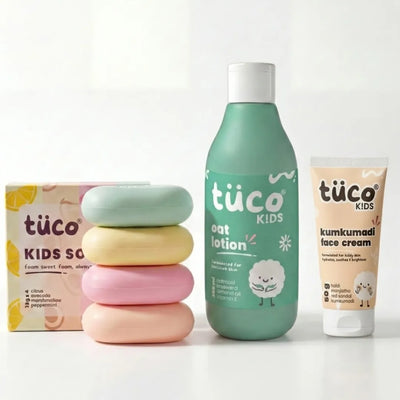
| Kids Daily Soap | Fragrance-light, sulphate-free everyday bar — a safe baseline while identifying a trigger | Rs. 350 | Shop Now → |
| 3-in-1 Bath Kit | Daily soap, lotion & face cream — a complete gentle routine once skin has settled | Rs. 699 | Shop Now → |
| Acne Face Gel | Aloe vera & rose water gel for preteens/teens — soothes redness from reactive, irritated facial skin | Rs. 349 | Shop Now → |
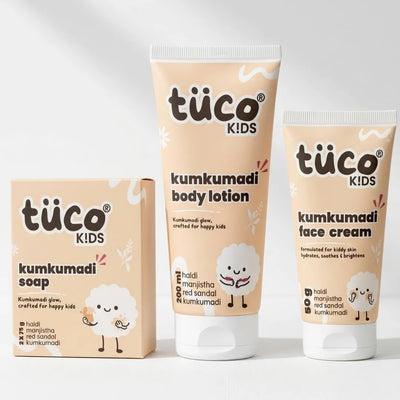
| 3-in-1 Kumkumadi Kit | Saffron & sandalwood routine for uneven tone left behind after a reaction has healed | Rs. 699 | Shop Now → |
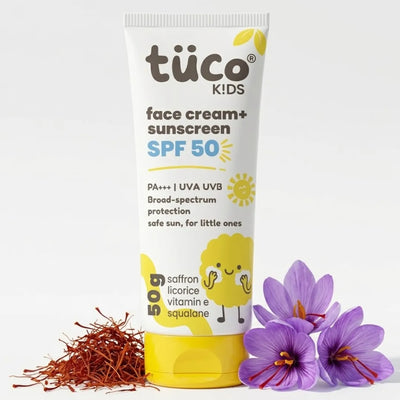
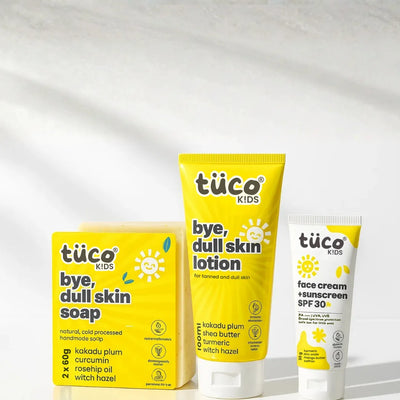
| 3-in-1 Dull Skin Kit (SPF 30) | Soap, sunscreen & face wash for kids whose reactions flare with sun exposure | Rs. 699 | Shop Now → |
Types of Skin Allergies in Kids: What They Look Like
- Contact dermatitis: redness and itching specifically where skin touched an irritant or allergen — a new soap, detergent, sunscreen, or fabric. Usually has a clear border matching where contact happened.
- Atopic dermatitis (eczema): dry, itchy, sometimes scaly patches, often in the creases of elbows and knees, that tend to recur rather than appear once and resolve. This is one of the more persistent forms of skin allergy in kids home remedies searches are trying to address.
- Hives (urticaria): raised, itchy welts that can appear anywhere and move around the body over hours — these can be triggered by food, medication, heat, or an unidentified cause.
- Heat rash (prickly heat): small red bumps in areas that trap sweat — neck folds, underarms, diaper area — common in hot, humid climates and not a true allergic reaction, though it's often searched alongside allergy terms.
- Cold-triggered rash: redness, hives, or itching that appears on exposed skin shortly after cold exposure. Cold rash in children home treatment is usually straightforward — rewarming the skin gradually and a fragrance-free moisturizer typically resolves it within an hour.

Preventing Repeat Flare-Ups
- Keep a simple log of new products, foods, and environments for a week after a reaction — patterns in skin allergy for kids are often only obvious in hindsight once you can compare a few incidents side by side.
- Switch the whole household's laundry detergent to a fragrance-free option if a specific product is suspected — residue on clothing and bedding is a commonly overlooked trigger.
- Moisturize daily, not just during a flare-up — a consistently hydrated skin barrier is meaningfully more resistant to new irritation than skin that's only treated reactively.
- For kids skin allergy that seems seasonal, keeping indoor air less dry (a humidifier in winter) and bathing promptly after swimming or heavy sweating both reduce flare frequency.
First-Line Home Remedies
- Cool compress: a soft cloth soaked in cool water, applied for 5–10 minutes, reduces redness, itching, and swelling for most mild reactions.
- Colloidal oatmeal bath: finely ground oatmeal mixed into lukewarm bathwater calms irritated skin — this is one of the most consistently recommended kids skin allergy home remedies across dermatology sources.
- Identify and remove the trigger: if symptoms started after a new soap, detergent, or food, stop using or exposing your child to that item immediately, and monitor over the next 24–48 hours.
- Fragrance-free moisturizer after bathing: applied while skin is still slightly damp, this helps rebuild the barrier that irritation has weakened — part of any solid baby skin allergy treatment plan.
- Loose, breathable clothing: tight or synthetic fabric can aggravate an active rash — cotton is gentler while skin is healing.
Shop 3-in-1 Oat Kit →

Decision Tree: What Kind of Reaction Is This?
- Is the rash limited to one specific spot that touched something new? → Likely contact dermatitis. Remove the trigger, cool compress, and a fragrance-free moisturizer should resolve it within a few days.
- Does it show up repeatedly in the same spots — elbow creases, behind knees — and looks dry and scaly? → Likely eczema-pattern dermatitis. This benefits from a consistent barrier-repair routine rather than one-off treatment; persistent cases are worth a doctor's input on a longer-term plan.
- Are there raised, itchy welts that seem to move or change location over hours? → Likely hives. Mild, isolated hives with no other symptoms usually settle within a day; see the emergency section below for what changes that.
- Is it small red bumps concentrated in sweaty areas, worse in heat? → Likely heat rash, not a true allergy. Cooling the area and loose clothing usually resolves it within a day or two.
When It's an Emergency — Not a Home Remedy
Most skin allergy reactions in kids are uncomfortable but not dangerous, and respond to the home care above. But a specific, recognizable set of signs means stopping home treatment and getting emergency help immediately — these indicate a severe allergic reaction (anaphylaxis), not a rash to manage at home:
- Difficulty breathing, wheezing, or a tight-feeling throat — call emergency services immediately.
- Swelling of the face, lips, tongue, or throat — this can progress fast and needs emergency care right away, not a wait-and-see approach.
- Widespread hives appearing together with vomiting, dizziness, or a rapid heartbeat — this combination, not hives alone, is what signals a systemic reaction.
- A rash that develops suddenly and rapidly after a new food, medication, or insect sting — treat this as a reason to seek urgent care rather than waiting to see if it worsens.
Outside of these specific signs, it's still worth a same-week doctor visit (not an emergency one) if a rash spreads significantly, oozes or shows signs of infection, or doesn't improve after several days of consistent home care.
FAQs
What is the fastest home remedy for a child's skin allergy?
A cool compress applied for 5–10 minutes gives the quickest relief for redness and itching, followed by a fragrance-free moisturizer once the initial reaction has calmed. For confirmed contact reactions, identifying and removing the trigger matters as much as any topical treatment.
How long does a typical skin allergy reaction last in kids?
Most mild reactions — contact dermatitis, isolated hives, heat rash — improve within a few days to a week with home care. Eczema-pattern reactions tend to recur rather than resolve permanently, which is why a consistent gentle routine matters more than a one-time treatment.
What triggers skin allergies in children most commonly?
New soaps, detergents, synthetic fragrances, certain fabrics, and specific foods are the most common triggers. Seasonal factors like pollen and heat can also worsen an already-sensitive skin barrier.
Are cold rashes in children different from other skin allergies?
Cold-triggered rashes typically appear as redness or hives on exposed skin shortly after cold exposure and usually resolve once the child warms up. If cold exposure ever triggers more than mild, localized redness — swelling or breathing changes — that's an emergency sign, not a cold rash.
Can I use adult allergy cream on my child's skin?
It's best to avoid this without guidance from a doctor or pharmacist — adult formulas are often stronger than what's appropriate for a child's thinner skin. A fragrance-free, pediatrician-appropriate moisturizer is the safer default for daily use.
Is oatmeal really effective for skin allergy relief in kids?
Yes — colloidal oatmeal has genuine anti-inflammatory and skin-calming properties and is one of the most consistently recommended natural remedies across dermatology sources, for both baths and as a paste applied directly to irritated areas.
When should I stop trying home remedies and see a doctor?
If a rash doesn't improve after several days of consistent care, keeps recurring, shows signs of infection (increasing warmth, oozing, spreading redness), or if you're ever unsure whether it's more than a mild reaction, that's the point to involve a doctor rather than continuing to guess at home.
What's the difference between skin allergy in kids treatment and adult treatment?
Children's skin is thinner and more permeable, so it absorbs more of whatever's applied to it and reacts faster to irritants than adult skin does. Treatments formulated for kids typically use gentler concentrations and skip actives (like retinoids or strong acids) that are standard in adult allergy or acne treatment.
Can food allergies cause skin reactions in kids without any digestive symptoms?
Yes — hives, eczema flare-ups, or general itchiness can be the only visible sign of a food allergy in some children, without any stomach upset at all. If a skin reaction consistently follows a specific food, it's worth discussing with a doctor even in the absence of other symptoms.
Does hot weather make skin allergies worse in kids?
Often, yes — sweat can trap bacteria against skin and worsen both heat rash and eczema, while increased scratching from general heat discomfort can break the skin and let irritants in more easily. Light, breathable clothing and prompt post-sweat washing both help during hot months.
Related Reads
- Worried About White Patches on Face of Child? Learn Causes, Treatments, and When to Consult a Dermatologist
- Best Face Cream for Kids in India: 6 Safe Picks for Soft, Glowing Skin
- 10 Best Organic Kids Skincare Brands in India (2026)
- Understanding the Causes of Dull Skin in Kids and Effective Treatments