



The Power of Turmeric: An Ancient Remedy for Kids' Skin Issues
Reaching for the turmeric jar the moment your child gets a rash or a patch of eczema is a very old habit — and for good reason, since curcumin (turmeric's active compound) really does calm inflammation. But raw turmeric paste on a child's skin comes with real trade-offs: staining, patch-test needs, and inconsistent strength — which is exactly why it works so much better formulated into a soap than mixed up in the kitchen.
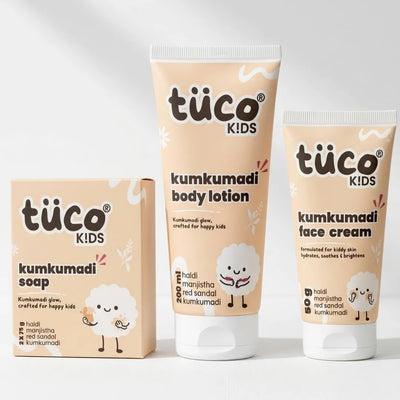
Tuco Kids tip: Skip the kitchen-counter paste and go straight to a formulated, non-staining option. The 3-in-1 Kumkumadi Kit for Kids delivers turmeric's calming benefits in a soap, lotion, and face cream that's already patch-tested and dosed correctly for children's skin.
Shop the 3-in-1 Kumkumadi Kit →
 Contents
- Quick Comparison: Best Tuco Turmeric-Powered Products
- How to Apply Turmeric on Baby Skin the Right Way
- Is Turmeric Good for Eczema?
- Using Turmeric for Skin Rashes
- Turmeric Soap vs. Raw Turmeric Paste
- When to See a Doctor
- FAQs
- Related Reads
Quick Comparison: Best Tuco Turmeric-Powered Products
| Product Name | Key Features | Best For | Shop |
|---|---|---|---|
| 3-in-1 Kumkumadi Kit | Saffron, sandalwood & turmeric soap, lotion & face cream — fragrance-light and non-staining | Everyday turmeric benefits without DIY mess | Shop Now → |
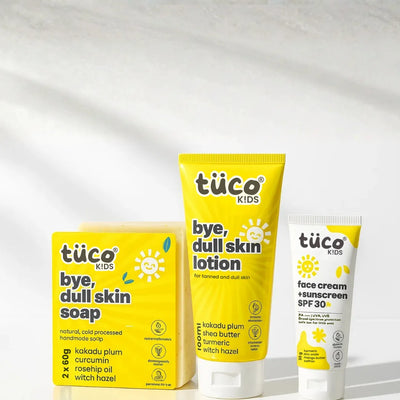
| 3-in-1 Dull Skin Kit (SPF 30) | Turmeric & Kakadu Plum with sun protection — calms redness while shielding from UV triggers | Rashes and dullness made worse by sun exposure | Shop Now → |
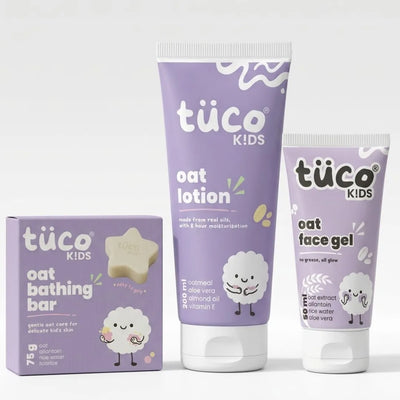
| 3-in-1 Oat Kit | Oat extract + aloe vera; barrier-repair formula for actively flaring, reactive skin | Active eczema flares, very reactive skin | Shop Now → |
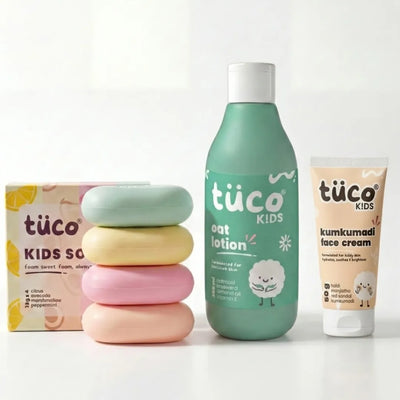
| Kids Daily Soap + Kumkumadi Lotion | Gentle daily cleanser paired with a lightweight turmeric-forward lotion | Daily maintenance routine, all skin types | Shop Now → |
| Kids Daily Soap | Sulphate-free everyday cleanser — the gentle base every routine should start with | Daily bath-time routine | Shop Now → |
| Acne Face Gel for Kids | Non-comedogenic face gel for breakout-prone skin that still needs anti-inflammatory support | Face use, acne-prone skin | Shop Now → |

Is How to Apply Turmeric on Baby Skin the Right Way
- Most home guides for how to apply turmeric on baby skin recommend mixing a pinch of powder with milk or yogurt into a smooth paste, leaving it on for 5–10 minutes, then rinsing with lukewarm water — but this DIY route brings inconsistent strength and a real risk of yellow staining on skin, clothes, and towels.
- Frequency matters: most sources cap raw turmeric paste at 1–2 uses a week, since baby skin is thin enough that overuse can dry it out rather than soothe it.
- A formulated turmeric for baby skin product removes the guesswork — correct concentration, no staining, and safe for daily use rather than twice a week.
- Always patch test first, whether using raw turmeric or a product: apply a small amount to the inner elbow, wait 24–48 hours, and check for redness or irritation before using it more broadly.
Is Turmeric Good for Eczema?
- Is turmeric good for eczema? Dermatology sources generally treat it as a complement, not a cure — curcumin's anti-inflammatory and antioxidant properties can calm redness and itching, but it works best alongside a proper barrier-repair routine, not instead of one.
- Does turmeric soap help with eczema? It can, but only if the soap itself is fragrance-free and gentle — a harsh, high-alkaline base will undo any benefit turmeric brings, which is a gap many "turmeric for eczema" articles skip.
- Turmeric eczema relief tends to work best in the maintenance phase between flares, rather than on actively broken or weeping skin, where richer, fragrance-free formulas do more good.
- For a child in an active flare, the barrier-repair 3-in-1 Oat Kit is gentler than a turmeric-forward formula; once skin calms down, switching to turmeric for eczema maintenance helps keep flares from returning.
Shop the 3-in-1 Kumkumadi Kit →
Using Turmeric for Skin Rashes
- Turmeric for skin rashes and insect bites is one of the most common traditional uses — curcumin's anti-inflammatory action can visibly reduce swelling and itching within a day or two of consistent use.
- Wondering how to use turmeric for skin rashes without the staining and mess of a paste? A ready-made turmeric soap or lotion applied at bath time gives the same calming effect with none of the kitchen prep.
- Turmeric for rashes works best on mild, non-broken irritation — heat rash, mosquito bites, minor chafing. It is not a substitute for medical treatment on rashes that are spreading, oozing, or infected.
- Combine turmeric with a gentle, sulphate-free cleanse — the Kids Daily Soap — so the skin isn't fighting a harsh cleanser and a rash at the same time.
Turmeric Soap vs. Raw Turmeric Paste
- Raw turmeric paste is potent but inconsistent — powder quality, freshness, and mixing ratios vary every time it's made at home, which makes results unpredictable on sensitive skin.
- A well-formulated turmeric soap keeps the curcumin concentration steady, is buffered to a skin-safe pH, and — critically — won't leave a yellow tint on skin or towels the way raw paste often does.
- Soap format also solves the "how long to leave it on" question competitors debate endlessly: a soap does its work during the wash, with no timed sit-and-rinse step to get wrong.
When to See a Doctor
Most mild rashes and eczema flares respond to a gentle, consistent routine within a week or two. See a pediatrician or dermatologist instead of continuing home care if:
- A rash is spreading rapidly, oozing, or looks infected.
- Your child develops hives, swelling, or breathing difficulty after using a turmeric product — these are signs of an allergic reaction, not a normal adjustment period.
- Eczema symptoms don't improve, or worsen, after 2–3 weeks of consistent gentle skincare.
- Itching is intense enough to disrupt sleep or has broken the skin from scratching.
FAQs
How do I apply turmeric on baby skin safely?
Mix a pinch of turmeric powder with milk or yogurt into a smooth paste, apply gently for 5–10 minutes, then rinse with lukewarm water — limit this to 1–2 times a week. For daily use without staining or guesswork, a formulated turmeric soap or lotion is the more consistent option.
Is turmeric good for eczema?
It can help as a complementary, anti-inflammatory addition to a broader routine, particularly during calm periods between flares. It works best paired with fragrance-free, barrier-repairing skincare rather than used alone during an active flare.
Does turmeric soap help with eczema?
Yes, if the soap itself is gentle and fragrance-free — a harsh cleansing base can cancel out turmeric's soothing effect. Look for a soap formulated specifically for sensitive, eczema-prone skin.
Can turmeric be used for skin rashes in kids?
Yes, for mild irritation like heat rash or insect bites — curcumin's anti-inflammatory properties can reduce redness and itching. It isn't a substitute for medical care on rashes that are spreading, oozing, or infected.
Does turmeric stain a child's skin?
Raw turmeric paste can leave a temporary yellow tint on skin, clothing, and towels. Formulated turmeric soaps and lotions are made to deliver the same benefits without the staining.
How often can I use turmeric on my child's skin?
Raw paste is generally limited to 1–2 times a week to avoid over-drying. A properly formulated turmeric soap or lotion is gentle enough for daily use as part of a normal bath-time routine.
Should I patch test turmeric before using it on my child?
Yes, always. Apply a small amount to the inner elbow or wrist, wait 24–48 hours, and check for redness or irritation before using it on a larger area — this applies to both raw turmeric and finished products.
Related Reads
- Worried About White Patches on Face of Child? Learn Causes, Treatments, and When to Consult a Dermatologist
- Best Face Cream for Kids in India: 6 Safe Picks for Soft, Glowing Skin
- 10 Best Organic Kids Skincare Brands in India 2026
- Understanding the Causes of Dull Skin in Kids and Effective Treatments