




Ayurvedic Beauty Secrets for Kids: Ancient Indian Wisdom for Radiant, Healthy Skin
Your 10-year-old complains her skin looks dull after summer vacation. Your mother suggests traditional Ayurvedic remedies—oil massage, herbal face packs, specific foods. But you're skeptical. Ancient practices for modern children? Will she tolerate oil massages? Are DIY herbal packs safe? How do you even determine her "dosha" when she's still developing? And honestly, can 5,000-year-old wisdom actually address today's skin concerns—pollution, air conditioning, processed foods, screen time—or is this just romanticizing tradition?
In the bustling world of modern skincare, there's a growing appreciation for time-honored traditions that have stood the test of time. One such tradition is Ayurveda, the ancient Indian system of medicine and wellness that dates back over 5,000 years.
Ayurveda is not just about treating ailments; it encompasses a holistic approach to health, beauty, and well-being. This isn't superficial beauty—it's comprehensive wellness reflecting internal balance, addressing root causes rather than symptoms, and supporting long-term health rather than quick cosmetic fixes.
This comprehensive guide explores Ayurvedic beauty secrets for kids—understanding doshas in children, adapting ancient practices for modern young skin, safe traditional ingredients, practical integration into busy family routines, and complete skincare systems honoring Ayurvedic principles—because ancient wisdom, properly applied, offers powerful benefits for children's developing skin.
Introduction to Ayurveda and Skincare for Children
Understanding the foundation:
What Is Ayurveda?
Ayurveda, derived from the Sanskrit words "Ayur" (life) and "Veda" (knowledge), is often referred to as the "science of life."
Core principles:
- 5,000+ years old: One of world's oldest holistic healing systems
- Originated in India: Developed by ancient sages, passed through generations
- Holistic approach: Treats whole person (body, mind, spirit), not just symptoms
- Prevention-focused: Maintaining health, not just curing disease
- Personalized: Recognizes individual constitution, needs
This ancient system emphasizes balance and harmony within the body, mind, and spirit.
Ayurveda's Skincare Philosophy
Ayurvedic skincare is rooted in the principle that true beauty comes from within and is achieved by maintaining balance in the body's three doshas: Vata, Pitta, and Kapha.
Key concepts:
- Beauty reflects health: Radiant skin = balanced internal state
- Individual constitution matters: No one-size-fits-all approach
- Natural ingredients: Plant-based, earth-derived substances
- Holistic care: Diet, lifestyle, mindset all affect skin
- Long-term thinking: Building health over time, not quick fixes
Each dosha represents a combination of the five elements (earth, water, fire, air, and ether) and influences various aspects of our physical and mental health.
Adapting Ayurveda for Children
Important distinctions for kids:
Children are not mini-adults:
- Still developing (physically, mentally, hormonally)
- Different needs than adult Ayurvedic protocols
- Simplified approaches more appropriate
- Gentler interventions sufficient
Focus for children:
- Support healthy development (not correction)
- Establish good habits early
- Address common childhood issues gently
- Build foundation for lifelong wellness
Understanding your child's dosha type is the first step in tailoring Ayurvedic beauty practices to suit their unique skin needs.
Understanding the Doshas and Children's Skin Types
Personalized approach:
The Three Doshas Explained
Each child has unique constitution—combination of three doshas, typically one or two predominant.
Vata Dosha in Children
Vata is characterized by the elements of air and ether.
Physical characteristics:
- Thin, light build
- Dry, delicate skin
- Variable appetite, energy
Skin manifestations: People with a predominant Vata dosha often have dry, thin, and delicate skin that is prone to premature aging and dehydration.
For children specifically: Vata skin requires deep hydration and nourishment to maintain its elasticity and glow.
Common Vata skin issues in kids:
- Persistent dryness (especially winter)
- Rough patches (elbows, knees)
- Flaky scalp
- Chapped lips
- Sensitivity to wind, cold
Skincare Tips for Vata Skin:
Hydration: Use rich, moisturizing oils like sesame oil or almond oil. Look for ingredients like ghee and aloe vera that provide intense hydration.
Gentle Cleansing: Opt for mild cleansers that do not strip the skin of its natural oils.
Nourishing Masks (occasional, age-appropriate): Apply hydrating masks made from ingredients like honey, avocado, and banana.
For children: Focus on daily moisturizing, gentle cleansing, protection from harsh weather.
Pitta Dosha in Children
Pitta is governed by the elements of fire and water.
Physical characteristics:
- Medium build
- Warm body temperature
- Strong digestion, appetite
Skin manifestations: Pitta skin is typically sensitive, fair, and prone to inflammation, redness, and breakouts.
The focus for Pitta skin is on cooling, soothing, and balancing.
Common Pitta skin issues in kids:
- Redness, flushing
- Heat rash, prickly heat
- Sun sensitivity
- Inflammatory reactions
- Early acne (pre-teens)
Skincare Tips for Pitta Skin:
Cooling Agents: Use ingredients like sandalwood, rose water, and cucumber to soothe and cool the skin.
Anti-inflammatory: Incorporate turmeric and neem to reduce inflammation and prevent acne.
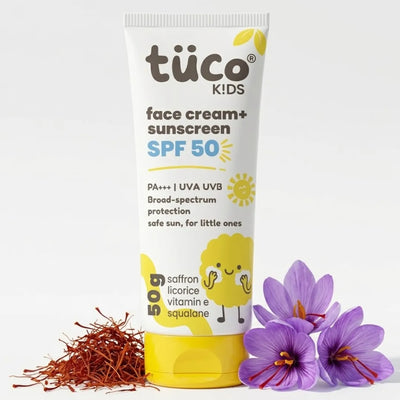
Sun Protection: Always use a natural, broad-spectrum sunscreen to protect against UV damage (especially important for sensitive Pitta skin).
For children: Cooling routines, sun protection, anti-inflammatory care, gentle products.
Kapha Dosha in Children
Kapha, consisting of earth and water elements, results in thick, oily, and often congested skin.
Physical characteristics:
- Sturdy, solid build
- Smooth, thick skin
- Steady energy, stamina
Skin manifestations: Kapha skin can be prone to blackheads, enlarged pores, and excess sebum production.
Common Kapha skin issues in kids:
- Oiliness (T-zone especially)
- Enlarged pores
- Blackheads, whiteheads
- Sluggish, dull appearance
- Congestion
Skincare Tips for Kapha Skin:
Exfoliation: Regular exfoliation with ingredients like gram flour (besan) and oats to remove dead skin cells and prevent clogged pores.
Balancing Oils: Use light oils like jojoba or grapeseed oil that do not add to the skin's natural oiliness.
Clay Masks (weekly, age-appropriate): Apply clay masks made from ingredients like multani mitti (Fuller's earth) to absorb excess oil and detoxify the skin.
For children: Regular gentle cleansing, light moisturizing, occasional exfoliation (gentle methods).
Ancient Ayurvedic Skincare Practices Adapted for Kids
Safe traditional methods:
1. Oil Massage (Abhyanga) for Children
Traditional practice: Abhyanga, or self-massage with warm oil, is a rejuvenating practice that nourishes the skin, improves circulation, and promotes relaxation.
Adapted for children:
Benefits for kids:
- Deep skin nourishment
- Calming, grounding effect
- Better sleep
- Parent-child bonding time
- Supports healthy development
How to Perform Abhyanga for Children:
Warm the Oil: Heat sesame, coconut, or almond oil to a comfortable temperature (test on your wrist—comfortably warm, not hot).
Choose oil by dosha:
- Vata children: Sesame oil (warming, heavy)
- Pitta children: Coconut oil (cooling)
- Kapha children: Light sesame or sunflower oil (lighter)
Massage technique:
- Have child sit/lie comfortably
- Apply the oil to body, starting from the feet and working your way up in circular motions (joints) and long strokes (limbs)
- Gentle, loving touch (not deep tissue massage)
- Include scalp (promotes healthy hair)
- Allow the oil to soak in for 15-30 minutes (child can play, read during this time)
Shower: Follow with a warm shower, avoiding soap on most body areas to let oil penetrate deeply—gentle cleanser only on necessary areas.
Frequency for children: 1-2 times weekly (not daily—too time-intensive for most families).
Age appropriateness: All ages benefit, but babies/toddlers need even gentler approach, shorter duration.
2. Oil Cleansing for Older Children (Simplified)
Oil cleansing is a cornerstone of Ayurvedic skincare, designed to maintain the skin's natural moisture barrier while effectively removing impurities.
Oils such as coconut, sesame, and almond oil are used to dissolve dirt and makeup without stripping the skin.
Adapted for kids (ages 10+):
How to Perform Oil Cleansing:
Choose Your Oil: Select an oil based on your dosha and skin type (lighter oils for Kapha, heavier for Vata).
Massage: Gently massage the oil onto your face for a few minutes (1-2 minutes sufficient for children).
Steam: Use a warm, damp cloth to steam your face, allowing the pores to open.
Wipe: Wipe away the oil and impurities with the cloth.
For children: Simpler than full adult protocol—quick, gentle, once weekly as special treatment, not daily necessity.
3. Gentle Herbal Steam (Simplified)
Herbal steaming is an excellent way to open up pores and allow the skin to breathe. Ayurvedic herbs like neem, tulsi (holy basil), and mint are often used for their purifying and antibacterial properties.
How to Perform Herbal Steam (child-safe version):
Boil Water: Bring a pot of water to a boil.
Add Herbs: Add your chosen herbs to the boiling water and let them steep (tulsi, mint, rose petals—child-friendly).
Steam carefully: Lean over the pot with a towel draped over head to trap the steam. Steam for 5-10 minutes (for children: 3-5 minutes maximum, not too close, supervised closely).
Rinse: Follow with a gentle rinse or a face mask suited to your skin type.
Safety for children:
- Always supervise closely (burn risk)
- Not too hot (comfortable warmth only)
- Shorter duration than adults
- Ages 10+ more appropriate (younger children difficult to keep safe/still)
Alternative: Simply holding warm, herb-soaked cloth on face safer for younger children.
4. Natural Gentle Exfoliation
Ayurveda emphasizes the use of natural, gentle exfoliants to remove dead skin cells and promote a healthy complexion. Ingredients like gram flour, rice flour, and oatmeal are commonly used.
For children (simplified, very gentle):
DIY Ayurvedic Exfoliant Recipe (child-appropriate):
Ingredients: 2 tablespoons of gram flour (besan), 1 tablespoon of rice flour, 1 tablespoon of yogurt, and a pinch of turmeric.
Method: Mix all the ingredients to form a paste. Apply to your face in circular motions (very gently—no pressure) and rinse off with lukewarm water.
For children:
- Use once weekly maximum (over-exfoliation damages)
- Very gentle application (no scrubbing)
- Ages 8+ more appropriate
- Patch test first (allergies possible)
Even gentler option: Just oatmeal + yogurt (no besan/turmeric) for very sensitive skin.
5. Face Masks (Age-Appropriate Formulations)
Face masks are an integral part of Ayurvedic beauty rituals. They are tailored to address specific skin concerns and nourish the skin deeply.
Simplified for children:
For Vata Skin (dry):
Ingredients: 1 mashed avocado, 1 tablespoon of honey, and 1 tablespoon of yogurt.
Method: Mix the ingredients into a smooth paste, apply to the face, and leave for 20 minutes (or 10 minutes for restless children) before rinsing off.
For Pitta Skin (sensitive, reactive):
Ingredients: 2 tablespoons of sandalwood powder, 1 tablespoon of rose water, and a few drops of lemon juice (optional—omit if very sensitive).
Method: Combine the ingredients, apply to the face, and leave for 15 minutes before rinsing off.
For Kapha Skin (oily):
Ingredients: 2 tablespoons of multani mitti (Fuller's earth), 1 tablespoon of neem powder, and water to make a paste.
Method: Mix into a paste, apply to the face, and leave for 20 minutes (or until slightly dry) before rinsing off.
For all children: Once weekly treat, not daily necessity. Make it fun, relaxing bonding time.
Complete Ayurvedic-Inspired Skincare Systems for Kids
Modern formulations, ancient wisdom:
Quality Products Incorporating Ayurvedic Principles
Rather than DIY for daily care, choose professionally formulated products honoring Ayurvedic ingredients, principles:
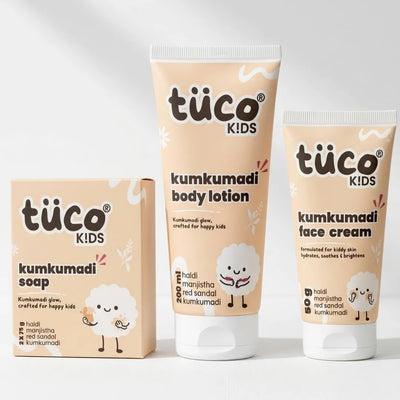
- Kumkumadi Face Cream + Dull Skin Face Wash
- Kumkumadi traditional Ayurvedic formula (saffron, sandalwood, turmeric, 16+ herbs)
- Addresses uneven tone, dullness
- Complete facial care
- Dull Skin Face Wash + Kumkumadi Face Cream
- Ancient formula, modern convenience
- Gentle cleansing + nourishing treatment
- Soap + Lotion + Sunscreen SPF 50 + Face Cleanser
- Comprehensive system
- Likely incorporates traditional Ayurvedic ingredients
Why formulated products better for daily use:
- Tested safety (appropriate concentrations)
- Convenient (realistic for busy families)
- Consistent results (stable formulations)
- No mess, staining
- Child-friendly textures, application
Reserve DIY for occasional special treatments, bonding experiences—not daily necessity.
Complementary Care
Gentle cleansing options:
- 10 Best Moisturizing Soaps In India For Dry Skin
- Best Soap And Face Washes For Pre-Teens And Teenagers
Bathing guidance: Is Soap Necessary For Bathing Young Children Every Day
Ayurvedic Diet for Children's Glowing Skin
Internal support:
Ayurveda teaches that beauty starts from within, and the foods you eat have a significant impact on your skin's health. A balanced diet that aligns with your dosha can help maintain clear, radiant skin.
Dosha-Specific Dietary Guidance (Simplified for Kids)
Vata-Pacifying Foods (for dry-skin-prone children):
- Warm, Moist Foods: Soups, stews, and cooked grains (comforting, grounding)
- Healthy Fats: Ghee, sesame oil, and avocados (internal moisturization)
- Hydrating Fruits: Oranges, grapes, and melons (sweet, juicy)
Pitta-Pacifying Foods (for sensitive-skin-prone children):
- Cooling Foods: Cucumber, leafy greens, and zucchini
- Sweet and Bitter Tastes: Apples, pears, and bitter gourd (balancing fire element)
- Hydration: Drink coconut water and herbal teas (cooling internally)
Kapha-Pacifying Foods (for oily-skin-prone children):
- Light, Dry Foods: Barley, millet, and apples
- Spices: Ginger, turmeric, and black pepper to boost metabolism (appropriate amounts for kids)
- Leafy Greens: Spinach, kale, and broccoli
Practical application for families: Don't obsess over perfect dosha diet—general healthy eating with slight emphasis on balancing foods for child's constitution.
Universal principles (all children):
- Fresh, whole foods over processed
- Adequate hydration
- Regular meal times
- Variety of fruits, vegetables
- Appropriate amounts (not overeating)
Ayurvedic Lifestyle Practices for Kids' Skin Health
Beyond products:
Yoga and Pranayama (Adapted)
Yoga and pranayama (breath control) are integral to Ayurveda and promote overall well-being, including skin health. Certain yoga poses improve blood circulation to the face, while pranayama techniques help detoxify the body.
Beneficial Yoga Poses for Skin (child-friendly):
Sarvangasana (Shoulder Stand): Improves blood flow to the face and head (advanced—teens only, proper instruction needed).
Matsyasana (Fish Pose): Opens up the chest and improves breathing, promoting better oxygen flow to the skin (gentle backbend, accessible).
Trikonasana (Triangle Pose): Enhances digestion and detoxification, which are crucial for clear skin (simple standing pose).
For children: Simple, fun yoga—not advanced practices. Family yoga sessions, child-appropriate classes.
Benefits beyond skin: Stress reduction, flexibility, body awareness, calm mind—all support overall health including skin.
Daily Routines (Dinacharya)
Ayurveda emphasizes consistent daily routines:
For children's skin health:
- Consistent sleep schedule (adequate restorative sleep)
- Regular meal times (supports digestion, metabolism)
- Daily hygiene routine (gentle cleansing, moisturizing)
- Outdoor time (fresh air, natural light—in moderation with sun protection)
- Stress management (play, creative time, family connection)
Creating balance: Aim to create a balanced skincare routine that includes cleansing, exfoliating (weekly, gentle), moisturizing, and protecting your skin. Use natural, gentle products that support your skin's health without harsh chemicals. Remember, consistency is key to seeing long-term benefits.
Modern Integration of Ayurvedic Practices for Children
Practical application:
What Works for Busy Modern Families
Realistic integration:
Daily (5-10 minutes):
- Gentle cleansing (morning, evening)
- Moisturizing
- Sun protection
- Quality formulated products (Kumkumadi-based systems)
Weekly (30-60 minutes):
- Oil massage (abhyanga—bonding time)
- Gentle exfoliation or mask (optional special treat)
- Extended self-care time
Monthly:
- Assess skin changes
- Adjust routine seasonally
- Try new Ayurvedic-inspired practice
Lifestyle always:
- Balanced diet (dosha-aware but not rigid)
- Adequate sleep
- Stress management
- Outdoor play (with sun protection)
Choosing Ayurvedic-Inspired Products
Many modern skincare brands are now incorporating Ayurvedic principles and ingredients into their formulations. Look for products that contain traditional Ayurvedic herbs and oils, such as neem, turmeric, sandalwood, and rose.
Quality indicators:
- Traditional ingredients (neem, turmeric, saffron, sandalwood, etc.)
- Age-appropriate formulations
- Chemical-free or minimal synthetic additives
- Dermatologically tested
- Reputable brands
Creating a Balanced Routine: Simple, consistent, gentle—not complex multi-step protocols young children won't tolerate.
The Bottom Line
Ayurveda for kids: Ancient wisdom, modern application.
Key Takeaways
Ayurvedic principles for children's skin: ✓ Holistic approach (internal + external health) ✓ Individual constitution matters (doshas) ✓ Prevention over treatment ✓ Natural ingredients ✓ Long-term thinking
Understanding doshas in children: ✓ Vata (dry, delicate): Deep hydration, gentle care ✓ Pitta (sensitive, reactive): Cooling, soothing, sun protection ✓ Kapha (oily, thick): Light products, regular cleansing
Practical Ayurvedic practices for kids: ✓ Oil massage (abhyanga) 1-2x weekly ✓ Gentle cleansing (dosha-appropriate) ✓ Natural ingredients (turmeric, neem, sandalwood, rose) ✓ Balanced diet (fresh, whole foods) ✓ Regular routines (sleep, meals, hygiene)
Modern integration: ✓ Quality formulated products: Patchy Skin Kit, Kumkumadi Glow Kit, Ultimate Dull Skin Kit ✓ Daily simple routines (cleanse, moisturize, protect) ✓ Weekly special treatments (massage, masks) ✓ Lifestyle practices (yoga, good sleep, stress management)
The Core Message
Ayurveda offers a treasure trove of beauty secrets that are as relevant today as they were thousands of years ago. By understanding your child's dosha and incorporating Ayurvedic practices into their skincare routine, you can achieve a natural, radiant glow that reflects their inner health and well-being.
The practical truth for children:
- Not about rigid dosha protocols
- Not about complex DIY preparations daily
- Not about perfection or obsession
It IS about:
- Understanding individual needs
- Using time-tested natural ingredients safely
- Holistic approach (inside and out)
- Building healthy habits early
- Connecting to cultural heritage
Your child's dull summer skin doesn't need elaborate treatments—it needs consistent gentle care honoring Ayurvedic principles: nourishing oil, cooling ingredients, balanced diet, adequate sleep, stress-free environment.
Start simply: Choose quality products with Ayurvedic ingredients (Kumkumadi-based systems), weekly oil massage as bonding time, fresh seasonal foods, regular routines. Within weeks, healthier, more radiant skin—not because Ayurveda is magic, but because holistic, consistent, individualized care supports optimal development.
By integrating Ayurvedic principles into your daily routine, you can unlock the ancient secrets of Indian beauty and enjoy the benefits of healthy, radiant skin—honoring tradition while meeting modern practical needs.
Related Resources: