







How Often Should Kids Wash Their Hair? An Age-by-Age Guide (3–15 Years)
"Am I washing my child's hair too often, or not enough?" is one of the most common questions Indian parents ask — and the honest answer is that it depends on age, hair type, activity level, and the season. Wash too rarely and you risk buildup, itching, and odour; wash too often (especially with the wrong shampoo) and you strip your child's scalp of the natural oils it needs, leading to dryness and irritation. This guide breaks down exactly how often kids should wash their hair at every age from 3 to 15, how that changes by season, and the warning signs that tell you you've got the frequency wrong.
Tuco Kids tip: If your child's hair washing routine is already part of a daily school morning rush, switching to a gentle, natural shampoo for kids that won't dry out their scalp even with frequent use makes the whole routine easier — for both of you.
Shop Natural Shampoo →
 What's in This Guide
- Quick Comparison: Tuco's Hair Wash & Care Products
- Quick Answer: How Often Should Kids Wash Their Hair?
- Ages 3–6: Twice-Weekly Washing
- Ages 7–10: Adjusting for Activity Level
- Ages 11–15: Puberty and Increased Oiliness
- Does Hair Type Change the Answer?
- Summer vs Winter: How Often to Wash Hair by Season (India)
- How Often Should You Oil Your Child's Hair?
- Signs of Overwashing and Underwashing
- A Sample Weekly Hair Wash Schedule
- Frequently Asked Questions
- Related Reads
Quick Comparison: Tuco's Hair Wash & Care Products
| Product | Best For | Key Features | Shop |
|---|---|---|---|
| Natural Shampoo for Kids (300ml, Pack of 3) | Regular 2–3x weekly wash routine, all ages | Sulphate-free · Tear-free · Gentle enough for frequent use · Value pack for the whole school term | Shop Pack of 3 → |
| Champi Kit (500ml) | Pre-wash oiling routine, winter scalp care | Hair Oil + Reetha Shampoo + Conditioner · Complete pre-wash-to-wash routine · 4.84★ (580+ reviews) | Shop Champi Kit → |
| Tangled and Frizzy Hair Regimen | Long or thick hair needing less-frequent washing | Detangling formula · Reduces breakage between washes · Makes longer gaps between washes manageable | Shop Detangling Regimen → |
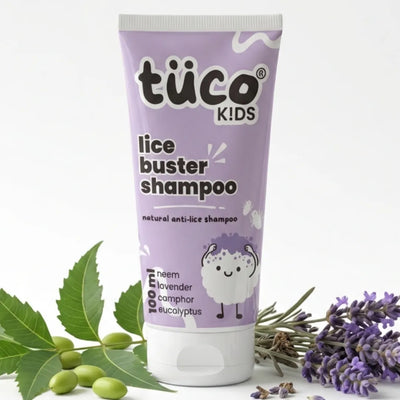
| Lice Shampoo for Kids (100ml) | School-going children, post-lice-exposure washing | Neem, lavender, camphor · Safe for frequent use during an active infestation period | Shop Lice Shampoo → |
| Anti-Lice Kit for Kids | Complete lice treatment requiring repeat washing over 1–2 weeks | Shampoo + comb + repeat-wash protocol · Designed for the multi-wash treatment cycle lice removal requires | Shop Anti-Lice Kit → |
Quick Answer: How Often Should Kids Wash Their Hair?
For most school-going Indian children, washing hair 2–3 times a week is the right baseline — not daily.
Should kids wash hair every day?
For the majority of children, no. Daily washing strips the scalp's natural oils, which can lead to dryness, irritation, and — counterintuitively — an oilier scalp as it overcompensates. The exceptions are children with very active sebaceous glands (common from age 11+ during puberty), children who swim daily, or children with naturally very oily, fine, straight hair.
The right frequency for your child depends on four factors, in order of importance:
- Age — younger children produce less scalp oil (sebum) and need less frequent washing than pre-teens and teens
- Hair type — straight and fine hair gets oily faster than curly or thick hair
- Activity level — sports, swimming, and outdoor play increase sweat and dirt buildup
- Season — Indian summers and monsoons demand more frequent washing than winter
Ages 3–6: Twice-Weekly Washing
At this age, children's sebaceous (oil-producing) glands are still relatively inactive, so their scalp doesn't get oily as quickly as an older child's or an adult's. Hair wash frequency for kids aged 3–6 should typically follow this pattern:
- Baseline: 2 times per week, regardless of hair type, unless there's visible dirt, sand, or food residue
- Longer or thicker hair: this can stretch to 1–2 times per week without issue
- Shampoo choice matters: always use a tear-free, sulphate-free kids shampoo — at this age, the scalp barrier is still developing and is more vulnerable to irritation from adult-strength surfactants
- Daily washing: rarely necessary at this age and can lead to a dry, flaky, or irritated scalp over time
If your child swims regularly (e.g. weekly swim classes), rinse hair with plain water immediately after swimming to remove chlorine, and follow with a full shampoo wash on your scheduled wash day.
Ages 7–10: Adjusting for Activity Level
This is the age range where hair wash routine for school going children starts to depend heavily on lifestyle, not just biology. Sebum production is still relatively low, but outdoor play, sports, sweat, and dust mean the scalp picks up more buildup day to day.
- Baseline: 2–3 times per week, increasing to 3 times for very active children
- Active sports kids: children playing daily outdoor sports (football, cricket practice, athletics) may need an additional wash mid-week, even outside their regular schedule
- Watch for early changes: some children, especially those approaching age 9–10, begin producing slightly more sebum as a precursor to pre-puberty changes
- Tangly or frizzy hair: washing less frequently with a good detangling routine — rather than washing more to "manage" frizz — is usually the better approach. See the Tangled and Frizzy Hair Regimen
Ages 11–15: Puberty and Increased Oiliness
This is when the answer to how often should kids wash their hair changes most dramatically. From around age 10–11, rising hormones significantly increase sebum production on the scalp — the same shift that's responsible for increased acne and body odour during this stage.
- Baseline: every other day to daily, depending on individual oil production
- Fine, straight hair: some pre-teens and teens genuinely do need daily washing at this stage; this is normal and not a sign of poor hygiene
- Choose the right formula: if washing daily, use a gentle, sulphate-free formula specifically designed to handle frequent use without over-drying. Reetha Shampoo is formulated for exactly this need, using the natural lathering and pH-balancing properties of Reetha and Hibiscus
- Curly or thick-haired tweens: may still only need 2–3 washes per week even at this age — hair type can override the age-based default
- Dandruff watch: this is also the age range where dandruff often first appears, driven by the same hormonal oil increase — a separate but related concern worth monitoring
For daily or alternate-day washing: Reetha Shampoo for Kids uses Reetha and Hibiscus — traditional Indian cleansing agents — to gently cleanse without the harsh stripping effect of sulphates, even with frequent use. Particularly effective in hard-water cities.
Shop Reetha Shampoo →Does Hair Type Change the Answer?
Yes — hair type is the second-biggest factor after age, and competitor research consistently shows parents searching for age-based advice without realising hair type often overrides it.
| Hair Type | Recommended Frequency | Why |
|---|---|---|
| Straight, fine hair | 3–4 times per week (up to daily for teens) | Oil travels quickly down a straight hair shaft, making it look greasy faster |
| Wavy hair | 2–3 times per week | Moderate oil distribution; balances cleanliness with moisture retention |
| Curly hair | 1–2 times per week | Natural oils take longer to travel down curl bends; over-washing causes dryness and frizz |
| Thick or coily hair | Once every 7–10 days | Naturally drier hair type; frequent washing strips essential moisture |
If your child's hair tends to tangle or frizz between washes regardless of type, that's a separate issue from wash frequency — see the Tangled and Frizzy Hair Regimen, designed to manage knots and frizz without needing to wash more often than the scalp actually requires.
Summer vs Winter: How Often to Wash Hair by Season (India)
India's seasonal extremes mean how often to wash child hair in summer is genuinely different from winter — this is one of the most distinctly Indian aspects of hair wash frequency, and one most global guides miss entirely.
Summer (March–June)
- Increase to 3 times per week, even for children who normally wash twice
- Heat and sweat accelerate oil buildup and create the ideal environment for scalp odour and irritation
- Active sports kids: for children playing outdoor sports daily, a post-activity water rinse (without shampoo) between full washes helps manage sweat without over-stripping the scalp
Monsoon (July–September)
- Maintain or slightly increase frequency — humidity keeps the scalp from drying fully between washes, which can encourage fungal activity if hair stays damp too long
- Dry hair thoroughly after each wash; damp hair left to air-dry in humid weather is a common contributor to scalp issues during this season
Winter (November–February)
- Reduce to 1–2 times per week — cold, dry air combined with frequent washing significantly increases the risk of a dry, flaky scalp
- Ideal season for champi: this is the ideal season to introduce a weekly pre-wash oil massage. See the Champi Kit for a complete oil-to-shampoo winter routine
- Don't over-reduce: many Indian families reduce washing too drastically in winter due to traditional concerns about cold-related illness — moderate reduction is appropriate, but skipping washes for 10+ days allows oil and dirt buildup that can cause its own scalp problems
How Often Should You Oil Your Child's Hair?
This is one of the most frequently searched companion questions to wash frequency — how often oil hair kids in the Indian context specifically, since hair oiling (champi) is a near-universal practice that needs to be coordinated with the wash schedule, not separate from it.
- Pre-wash oiling: 1–2 times per week, applied 30–60 minutes before shampooing — this is the most effective approach for most children
- Avoid overnight oiling when possible — extended oil contact on the scalp can contribute to buildup and, in dandruff-prone scalps, can feed fungal activity
- Match oiling to wash days: if your child washes 2–3 times per week, oil before 1–2 of those washes, not every single one
- Winter is when oiling matters most — combine the two into a single weekly ritual using the Champi Kit, which bundles hair oil, Reetha shampoo, and conditioner specifically for this pre-wash-to-wash routine

The complete oil-to-wash routine: The Champi Kit — Hair Oil + Reetha Shampoo + Conditioner — is built for the traditional Indian pre-wash champi ritual. Rated 4.84★ by 580+ parents.
Shop Champi Kit →Signs of Overwashing and Underwashing
Frequency guidelines are a starting point — your child's actual scalp is the best indicator of whether you've got it right. Here's how to tell which way to adjust.
| Overwashing Signs | Underwashing Signs | |
|---|---|---|
| Scalp feel | Tight, dry, sometimes flaky | Oily, sometimes itchy |
| Hair appearance | Dull, frizzy, brittle | Greasy, flat, weighed down |
| Common cause | Washing daily with a harsh (sulphate-heavy) shampoo | Washing less than once a week, or skipping washes after sweaty activity |
| Risk if unaddressed | Scalp overcompensates by producing more oil — a cycle that worsens both dryness and greasiness | Buildup, odour, and increased risk of dandruff or scalp irritation |
| The fix | Reduce frequency slightly and switch to a sulphate-free natural shampoo for kids | Increase frequency to the age-appropriate baseline and ensure thorough rinsing |
A quick rule of thumb: if your child's hair looks oily within 1–2 days of a wash, you're likely underwashing for their hair type. If their scalp feels tight, itchy, or flaky regardless of how recently they washed, you're likely overwashing — or using a shampoo that's too harsh for daily or frequent use.
A Sample Weekly Hair Wash Schedule
For a typical school-going child aged 7–10 with average (wavy-to-straight) hair, in a non-summer month, a workable weekly schedule looks like this:
- Monday: Wash day — shampoo + conditioner
- Tuesday–Wednesday: No wash; brush/detangle morning and night
- Thursday: Wash day (especially if sports/PE happened mid-week)
- Friday–Saturday: No wash; water rinse only if very sweaty from play
- Sunday: Pre-wash oil massage (champi) in the evening, wash the following morning if needed, or treat as a third wash day if hair feels oily
Adjust this template up for ages 11–15 or very active children (add a wash day), and down for ages 3–6 or curly/thick hair types (remove a wash day).
Frequently Asked Questions
Should kids wash their hair every day?
For most children, no. Daily washing with a regular shampoo strips natural scalp oils and can cause dryness or irritation. The exception is children aged 11+ with high sebum production — for them, daily washing with a gentle, sulphate-free formula is appropriate and won't cause the same dryness a harsh adult shampoo would.
How do I know if my child is shampooing too often or not enough?
Watch the scalp, not the calendar. A tight, dry, or flaky scalp signals overwashing; an oily scalp or hair that looks greasy within a day or two of washing signals underwashing. Adjust frequency by one wash per week in the relevant direction and reassess after two weeks.
How many times a week should a child wash their hair?
As a general guide: ages 3–6, twice a week; ages 7–10, 2–3 times a week depending on activity level; ages 11–15, every other day to daily depending on oil production and hair type. Hair type can shift these numbers up or down by one wash either way.
Is it bad to wash a child's hair every day?
It depends entirely on the shampoo and the child's hair type. Daily washing with a harsh, sulphate-heavy shampoo is genuinely harmful for most children's scalps. Daily washing with a mild, tear-free natural shampoo for kids formulated for frequent use is generally safe for children whose hair type and age genuinely require it.
How often should a child with curly hair wash their hair?
Curly-haired children typically need washing only 1–2 times per week. Curly hair's natural oils take longer to travel down the hair shaft, and over-washing strips moisture that curls need to stay defined and avoid frizz. Pair less-frequent washing with a good detangling routine like the Tangled and Frizzy Hair Regimen to manage knots between washes.
How often should you wash a child's hair in summer in India?
In Indian summer conditions, most children benefit from washing 3 times per week — up from a typical 2 times in cooler months. Heat, sweat, and outdoor play accelerate oil and dirt buildup. A post-play water rinse between full shampoo washes can help manage sweat without over-washing.
How often should you oil a child's hair?
Oil the scalp 1–2 times per week, applied 30–60 minutes before a scheduled shampoo wash — not as a separate, unrelated routine. Avoid leaving oil on overnight, as extended contact can contribute to scalp buildup. The Champi Kit is built around this exact pre-wash-to-wash sequence.
What's the best hair wash routine for a school-going child in India?
A workable hair wash routine for school going children typically follows 2–3 fixed wash days per week (e.g. Monday and Thursday), with an additional wash or water rinse after intense sports days, and a weekly pre-wash oil massage worked in on a non-school evening. Consistency on the same days each week makes the routine easier for both parent and child to maintain.
Can washing a child's hair too often cause hair loss?
Washing frequency itself does not directly cause hair loss in children. However, overwashing with a harsh shampoo can weaken hair strands over time, making them more prone to breakage — which can look like hair loss even though it isn't follicle-related. If you notice genuine thinning or bald patches, consult a paediatrician rather than adjusting wash frequency alone.
Does a child need to wash their hair after swimming?
Yes — chlorine and pool chemicals are drying and can irritate a child's scalp if left in the hair. A plain water rinse immediately after swimming removes most residue; a full shampoo wash isn't necessary every time unless it's already a scheduled wash day.
How often should a child with lice-prone hair be washed?
Hair wash frequency itself doesn't prevent lice, but if your child has been exposed to lice at school, a treatment shampoo needs to be used according to its specific protocol — typically an initial wash followed by a repeat wash 7–10 days later to catch any newly hatched lice. The Lice Shampoo for Kids or the complete Anti-Lice Kit are designed around this repeat-wash cycle, separate from your child's regular wash schedule.
Related Reads
- Best Shampoo for Kids in India — 3 Gentle, Tear-Free Picks for Healthy Hair
- Unveiling the Best Anti-Dandruff Shampoos for Kids
- Why Your Child Should Never Use Adult Shampoo: The Importance of Tear-Free, Kid-Friendly Hair Care
- What Is Coco Glucoside, and Why Is It in Your Child's Shampoo?