




Haircare for Teenage Girls in India: Best Shampoo, Oil & Routine (Ages 10–15)
The years between 10 and 15 bring some of the most dramatic changes to a girl's hair — and most parents and daughters are completely unprepared for them. Scalp oil production that was perfectly manageable at age 9 suddenly triples by age 12. Hair that used to be washed twice a week now needs washing every other day. And for many Indian girls, the first period brings not just hormonal changes but a sharp increase in hair fall that can feel alarming. The haircare routine for teenage girls in India needs to change fundamentally during these years — and the products that worked at age 8 often no longer serve a 13-year-old at all. This guide explains why, what to do about it, and gives you a practical 3-step routine your daughter will actually follow.
Tuco Kids tip: The most common mistake parents make when their daughter's hair starts getting oilier in puberty is switching to a harsh adult clarifying shampoo — which over-strips the scalp, triggers more oil production, and creates a cycle that worsens everything. The Reetha Shampoo for Kids is the best shampoo for teen girls with an oily scalp — reetha's natural cleansing properties remove excess oil without stripping, balancing the scalp rather than fighting it.
Shop Reetha Shampoo →
What's in This Guide
- Quick Comparison: Tuco Products for Teen Hair
- Why Your Daughter's Scalp Gets Oilier at 10–12
- The Sulphate-Free Shampoo Question: What Indian Teen Hair Actually Needs
- The Oil Frequency Debate: How Often Should a Teenage Girl Oil Her Hair?
- Hair Fall After the First Period: Iron Deficiency and What to Do
- Teen Dandruff: Why It Peaks at 11–13 and How to Treat It
- Frizzy, Tangled Hair in Teenage Girls: Causes and Solutions
- The 3-Step Routine Teenage Girls Will Actually Follow
- Frequently Asked Questions
- Related Reads
Quick Comparison: Tuco Products for Teen Hair (Ages 10–15)
| Concern | Tuco Product | Key Features | Shop |
|---|---|---|---|
| Oily scalp, frequent washing | Reetha Shampoo (300ml) | Soapnut base · Balances oil without over-stripping · Effective in hard water · Sulphate-free · Best for alternate-day or daily wash | Shop → |
| Pre-wash oiling + winter scalp care | Champi Kit (500ml) | Hair Oil + Reetha Shampoo + Conditioner · Complete pre-wash-to-wash ritual · 4.84★ (580+ reviews) · Ayurvedic champi tradition modernised | Shop → |
| Frizzy, tangled, hard-to-manage hair | Tangled & Frizzy Hair Regimen | Detangling formula · Reduces knots between washes · Manages frizz without heavyweight silicones · Extends wash day gaps | Shop → |
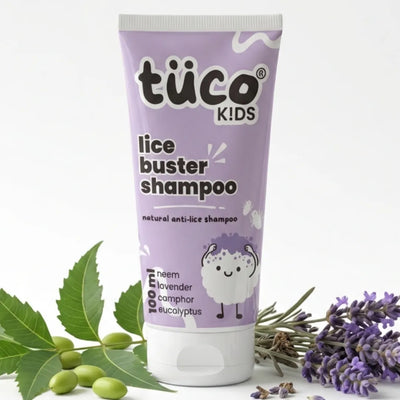
| Lice (common in school-going teens) | Anti-Lice Kit | Shampoo + nit comb + two-treatment protocol · Neem, lavender, camphor · No permethrin · Complete clearance in 10 days | Shop → |
Why Your Daughter's Scalp Gets Oilier at 10–12
Between ages 10 and 12, rising levels of androgens (male hormones present in girls too) trigger a significant increase in sebaceous gland activity — the oil-producing glands on the scalp. The same hormonal surge that's responsible for body odour and acne also dramatically increases scalp sebum production. This is why the best shampoo for 10 year old girls in India is fundamentally different from what worked at age 7 — it needs to manage increased oil production while still being gentle enough for a scalp that is simultaneously more active and more sensitive.
- The oil cycle problem: the most damaging response is switching to a harsh, sulphate-heavy adult shampoo to "cut through" the grease. Sulphates strip the scalp so thoroughly that it overcompensates by producing even more oil — creating a cycle that makes the problem progressively worse over months
- Washing frequency increases: a girl who washed twice a week at age 9 may genuinely need to wash every other day by age 12 — this is biologically driven and normal, not a hygiene failure. The key is using a gentle, balancing formula that can handle this frequency without drying the scalp
- Hair type shifts: many Indian girls notice their hair texture changes during puberty — previously straight hair may become wavier or frizzier, and previously manageable hair may become thicker and harder to detangle. This is a hormonal effect on the hair follicle shape
- Hard water compounds the problem: in cities like Bengaluru, Delhi, Mumbai, and Pune where water hardness is high, mineral deposits interact with excess scalp oil to create a particularly stubborn form of buildup that looks like dandruff. Reetha shampoo is exceptionally effective here because it lathers naturally in hard water and lifts mineral deposits that standard shampoos leave behind
The Sulphate-Free Shampoo Question: What Indian Teen Hair Actually Needs
When parents search for the best shampoo for 14 year old girls in India, they encounter two conflicting pieces of advice: "sulphate-free is always gentler" versus "oily hair needs a stronger clarifying shampoo." Here is the honest answer:
| Hair Situation | What to Use | Why |
|---|---|---|
| Oily scalp, washing every other day or daily | Sulphate-free balancing shampoo (e.g. Reetha Shampoo) | Sulphates used at high frequency strip the scalp, which signals it to produce more oil. A balancing formula cleanses oil without triggering the rebound cycle |
| Normal scalp, washing 2–3 times per week | Gentle sulphate-free formula (Natural Shampoo) | Maintains the scalp's natural moisture balance between washes; suitable for the standard school routine |
| Very oily, washing once a week only | A mild sulphate-containing formula is acceptable at this low frequency | Once-weekly washing with a mild sulphate won't cause the rebound cycle; it provides thorough oil removal without the frequency problem |
| Dandruff + oily scalp | Sulphate-free antifungal formula (Reetha Shampoo) | Reetha's natural saponins are antifungal as well as cleansing — addressing both problems simultaneously without the strip-and-rebound cycle |
What to look for on the label: avoid sodium lauryl sulphate (SLS) and sodium laureth sulphate (SLES). Look instead for coco glucoside, cocamidopropyl betaine, or sodium cocoyl isethionate — gentle surfactants that clean effectively without stripping. Also avoid synthetic fragrance ("parfum"), parabens, and artificial colours, which are common contact irritants on teen scalps that are already sensitised by hormonal changes.
For oily scalp shampoo for teenage girls: The Reetha Shampoo uses Reetha and hibiscus — India's original scalp-balancing cleansers — to remove excess oil without triggering the rebound oil cycle that harsh shampoos create. Sulphate-free, safe for daily use, and particularly effective in hard-water cities.
Shop Reetha Shampoo →The Oil Frequency Debate: How Often Should a Teenage Girl Oil Her Hair?
The champi (pre-wash oil massage) is deeply embedded in Indian hair care culture — and it remains genuinely beneficial for teenage girls. But the traditional practice of overnight oiling needs to be significantly modified during puberty. Here is what competitor content consistently misses: the same hormonal increase that makes the scalp oilier also makes it significantly more prone to product buildup and fungal overgrowth if oil is left on too long.
- Recommended frequency: 1–2 times per week, applied 30–60 minutes before shampooing — not overnight and not left on all day
- Why overnight oiling is counterproductive during puberty: an already oil-rich scalp with oil applied overnight creates the ideal warm, fatty-acid-rich environment for Malassezia fungus — the organism responsible for dandruff. Most teenage girls who develop dandruff have been overnight oiling; stopping this single habit often resolves 60–70% of the dandruff
- Which oils to use: coconut oil and almond oil are the best pre-wash options for teen hair. Avoid heavy oils (castor, mustard in large quantities) on the scalp — apply these to the hair lengths if at all. Bhringraj and amla in light carrier oils are excellent for hair fall concerns during puberty
- How to apply correctly: warm the oil slightly, apply to the scalp (not the lengths) using fingertips in small sections, massage gently for 5 minutes in a vertical motion (not vigorous circular scrubbing which causes mechanical hair fall), leave for 30–60 minutes, then shampoo out thoroughly
- The complete champi-to-wash routine: use the Champi Kit — which includes a pre-wash oil, Reetha shampoo, and conditioner — to take the guesswork out of this routine
The champi ritual, modernised: The Champi Kit bundles a lightweight scalp oil with Reetha Shampoo and a conditioning rinse — the complete pre-wash-to-wash sequence for teenage girls, designed for the 30–60 minute oil window rather than overnight. Rated 4.84★ by 580+ parents.
Shop Champi Kit →
Hair Fall After the First Period: Iron Deficiency and What to Do
This is the section that most competitor blogs miss entirely — and it is the single most important piece of information for parents of teenage girls in India. Hair fall in teenage girls in India that begins or worsens within 3–6 months of the first menstrual period is very often caused by iron deficiency anaemia — not by hair products, not by washing frequency, and not by anything the shampoo can fix.
Why iron deficiency causes hair fall
- The mechanism: iron is required for the production of haemoglobin, which carries oxygen to hair follicles. Low iron = reduced oxygen to follicles = hair follicles entering the resting (telogen) phase prematurely = increased shedding 2–3 months after the deficiency begins
- Why Indian teenage girls are particularly at risk: monthly menstrual blood loss requires additional iron intake that many Indian diets — even nutritionally adequate ones — do not automatically provide. Tea consumed with meals (extremely common in Indian households) significantly inhibits iron absorption from plant sources. Iron deficiency anaemia affects a substantial proportion of adolescent girls in India across all socioeconomic groups
- How to recognise it: the hair fall feels more diffuse than pattern hair loss — hair sheds from all over the scalp, not from any specific area. You may notice more hair in the drain after washing, on the pillow, or in the comb. The scalp itself looks normal with no bald patches
- What to do: ask your daughter's paediatrician for a serum ferritin blood test — this is the most sensitive marker of iron storage, and it needs to be done specifically (a standard haemoglobin test can appear normal while ferritin is already depleted). If ferritin is low, your doctor will recommend iron supplementation alongside dietary changes
Dietary changes that help immediately
- Increase iron-rich foods: dark leafy greens (palak, methi), rajma, chana, lentils (dal), jaggery, sesame seeds (til), pumpkin seeds, ragi
- Pair with Vitamin C: iron absorption from plant sources increases dramatically when eaten with Vitamin C — amla, lemon on dal, tomatoes in sabzi, fresh orange juice with meals
- Separate tea from meals: shift tea consumption to at least 1 hour after eating — tannins in tea block iron absorption from the previous meal
- Address protein intake: protein is the building block of the hair shaft. Indian vegetarian teenagers often have adequate calories but insufficient protein — ensure your daughter has a protein source at every meal (dal, paneer, curd, eggs if non-vegetarian, legumes)
Important: no shampoo will fix iron-deficiency hair fall. The solution is dietary and medical. However, a gentle, non-irritating shampoo reduces mechanical hair fall during washing — the Natural Shampoo (Pack of 3) is free from all common scalp irritants and minimises hair shaft damage during the wash process.
Teen Dandruff: Why It Peaks at 11–13 and How to Treat It
Dandruff in teenage girls peaks between ages 11 and 13 — directly tracking the hormonal oil surge of early puberty. The Malassezia fungus that causes dandruff feeds on scalp oil; when oil production doubles or triples during puberty, fungal activity follows. Here is what the shampoo for teenage girls in India needs to do differently compared to a younger child's shampoo:
- Address the fungal cause, not just the flake: a moisturising shampoo or regular kids' shampoo will not resolve teen dandruff. The shampoo needs antifungal botanical actives — mint, ginger, and activated charcoal are the most evidence-backed natural options. The Flake Fighter Shampoo addresses this directly through natural anti-fungal ingredients.
- Stop overnight oiling immediately: as explained in the oiling section above, this is the single highest-impact change for teen dandruff. Switch to pre-wash oiling for 30–60 minutes only
- Wash frequency matters: dandruff cannot be resolved by washing less frequently. During an active dandruff phase, washing 2–3 times per week with an antifungal shampoo is necessary — but use a gentle, sulphate-free formula to avoid the rebound oil cycle
- Adult anti-dandruff shampoos are not appropriate: Head & Shoulders, Selsun Blue, and similar adult anti-dandruff shampoos contain selenium sulfide or zinc pyrithione at adult concentrations, combined with sulphates and synthetic fragrance. These can work short-term but worsen the oil rebound cycle in teenagers and are not formulated for use by someone still in active puberty

Frizzy, Tangled Hair in Teenage Girls: Causes and Solutions
Many teenage girls in India find that hair that was relatively manageable at age 9–10 becomes significantly frizzier and harder to detangle by age 13–14. This is a direct result of hormonal changes altering the structure of the hair follicle — the same follicle can begin producing a slightly different hair shaft shape during puberty, which changes texture. India's humidity compounds this significantly.
- Don't brush wet hair: wet hair is significantly weaker than dry hair and breaks much more easily under brushing. Use a wide-tooth comb starting from the ends, working upward to the roots, only after applying a leave-in conditioner or detangling product. Never brush from root to tip on wet hair
- Conditioner is non-negotiable at this stage: teenage girls who skip conditioner in the name of avoiding greasiness are making the correct instinct but the wrong choice — the solution is to apply conditioner to hair lengths and ends only, never on the scalp. This provides the frizz control and detangling needed without adding scalp oiliness
- Avoid heat styling if possible: flat irons and blow dryers on high heat significantly weaken the hair shaft and increase frizz long-term. Air drying or blow drying on cool setting is preferable, especially for hair already compromised by puberty-driven texture changes
- For persistent knots and frizz: the Tangled & Frizzy Hair Regimen is specifically designed for this — it reduces mechanical breakage between wash days and makes detangling significantly less damaging, which matters particularly during the puberty years when hair fall is already elevated
For frizzy, tangled teen hair: The Tangled & Frizzy Hair Regimen reduces knots and frizz between washes without silicones or heavyweight conditioners that make oily teenage scalps worse. The missing piece in most teenage hair routines.
Find Your Solution →The 3-Step Routine Teenage Girls Will Actually Follow
Lengthy routines don't survive contact with a 13-year-old's morning schedule. Here is the haircare routine for teenage girls in India that is practical, fast, and actually produces results — designed around the real constraints of school schedules, homework pressure, and the average Indian bathroom.
Step 1 — Pre-Wash Oil (Once a Week, 30–60 Minutes Before Wash)
- Apply a small amount of the Champi Kit oil to the scalp only in small sections
- Massage gently with fingertips for 5 minutes — vertical strokes, not vigorous circular scrubbing
- Leave for 30–60 minutes maximum, then wash out immediately with Step 2
- Do this on a Sunday evening before a Monday wash — builds a consistent weekly habit
Step 2 — Shampoo Wash (2–4 Times Per Week Depending on Oil Production)
- Wet hair thoroughly with lukewarm water — not hot (hot water worsens scalp oil production)
- Apply Reetha Shampoo to the scalp only — not the hair lengths — and massage gently for 2 minutes
- Rinse very thoroughly — at least 60 seconds of rinsing after lathering. Shampoo residue left on the scalp is a hidden cause of buildup and irritation
- For very active days (sports, PE, dance class) — a water rinse without shampoo is sufficient between full washes
Step 3 — Condition the Lengths (Every Wash)
- Apply conditioner from mid-length to ends only — never on the scalp
- Leave for 2 minutes, rinse thoroughly
- Do not rub hair dry with a towel — gently squeeze water out and air dry or cool blow dry
- Detangle when almost dry (not soaking wet) using a wide-tooth comb, starting from ends upward
This three-step routine takes approximately 12–15 minutes on wash days and 2 minutes on non-wash days. It is compatible with school morning schedules and produces measurably better results than complicated 6-step routines that get abandoned by Week 2.
The complete teen hair kit: Natural Shampoo (Pack of 3) covers a full school term with a gentle, sulphate-free formula safe for the 2–4x weekly washing a teenage girl's scalp requires. The most practical best kids shampoo in India for girls transitioning through puberty — no need to switch products mid-year.
Shop Natural Shampoo Pack of 3 →Frequently Asked Questions
What is the best shampoo for a 14-year-old girl in India?
The best shampoo for a 14-year-old girl in India needs to manage increased puberty-driven oil production without the harsh stripping effect of adult sulphate shampoos. The Reetha Shampoo for Kids uses soapnut saponins that balance oil rather than strip it, is sulphate-free, and works effectively in the hard-water conditions of most Indian cities. It bridges the gap between a young child's shampoo (too gentle for puberty oil levels) and an adult shampoo (too harsh for a developing scalp).
What is the best shampoo for an 8-year-old girl in India?
At age 8, sebum production is still relatively low and the scalp is more sensitive than an older child's. The best shampoo for an 8-year-old girl in India should be completely sulphate-free, tear-free, fragrance-free, and gentle enough for twice-weekly washing without drying the scalp. The Natural Shampoo (Pack of 3) is formulated for exactly this age — no SLS, no parabens, no synthetic fragrance, and a pH balance appropriate for a younger child's scalp.
Why is my teenage daughter's hair falling out?
The three most common causes of hair fall in teenage girls in India are: iron deficiency anaemia (particularly post-menarche, when monthly blood loss increases iron requirements); hormonal changes during puberty that temporarily disrupt the hair growth cycle; and stress (exam pressure and social dynamics in Class 9–11 are significant hair fall triggers in Indian teenagers). Ask her paediatrician for a serum ferritin test — this is the fastest way to rule in or out the most common cause.
How often should a teenage girl wash her hair in India?
Between 2–4 times per week, depending on oil production and activity level. Girls with straight, fine hair, high sebum production, or who play daily sports may need every-other-day washing. Girls with curly or thick hair or lower oil production can manage 2 times per week. Daily washing is appropriate if a gentle, sulphate-free formula is used — but daily washing with a harsh adult shampoo will worsen oil production over time.
Can I use adult anti-dandruff shampoo on my 12-year-old?
No. Adult anti-dandruff shampoos (Head & Shoulders, Selsun, Nizoral) contain selenium sulfide, zinc pyrithione, or ketoconazole at adult concentrations, combined with sulphates and synthetic fragrance. These concentrations are not tested or appropriate for a 12-year-old's scalp, which is still developing and significantly more sensitive. For teen dandruff, use a sulphate-free formula with natural antifungal botanicals like reetha or neem — the Reetha Shampoo is formulated for exactly this.
Should teenage girls oil their hair overnight?
No — not during puberty, and especially not if there is any dandruff or oily scalp. Overnight oiling on an already oil-rich puberty scalp feeds the Malassezia fungus that causes dandruff and creates a thick buildup that standard shampoos struggle to fully remove. Switch to a pre-wash oil application of 30–60 minutes maximum — this gives all the scalp nourishment benefits of champi without the buildup and fungal risk of overnight application.
What causes an oily scalp in teenage girls?
The primary cause is hormonal — rising androgens during puberty dramatically increase sebaceous gland activity on the scalp, tripling oil production in some girls between ages 10 and 13. Secondary causes include: using harsh shampoos that trigger the rebound oil cycle; overnight oiling that adds external oil to an already oil-rich scalp; and washing too infrequently, which allows oil and dead skin cells to build up. A balancing, sulphate-free formula like the oily scalp shampoo for teenage girls — Reetha Shampoo — addresses the hormonal oil production without triggering the rebound cycle.
Is it normal for a teenage girl's hair texture to change during puberty?
Yes — entirely normal. Hormonal changes during puberty alter the shape of the hair follicle itself, which directly changes the hair shaft produced. Previously straight hair may become wavier, frizzier, or thicker. Previously fine hair may become coarser. These changes are permanent or semi-permanent and require adjusting the hair care routine rather than trying to fight the new texture. The Tangled & Frizzy Hair Regimen is designed for exactly this transition phase.
Related Reads
- Best Shampoo for Kids in India — 3 Gentle, Tear-Free Picks for Healthy Hair
- Unveiling the Best Anti-Dandruff Shampoos for Kids
- Why Your Child Should Never Use Adult Shampoo: The Importance of Tear-Free, Kid-Friendly Hair Care
- What Is Coco Glucoside, and Why Is It in Your Child's Shampoo?